Section Two: Crisis of Postwar Stalinism
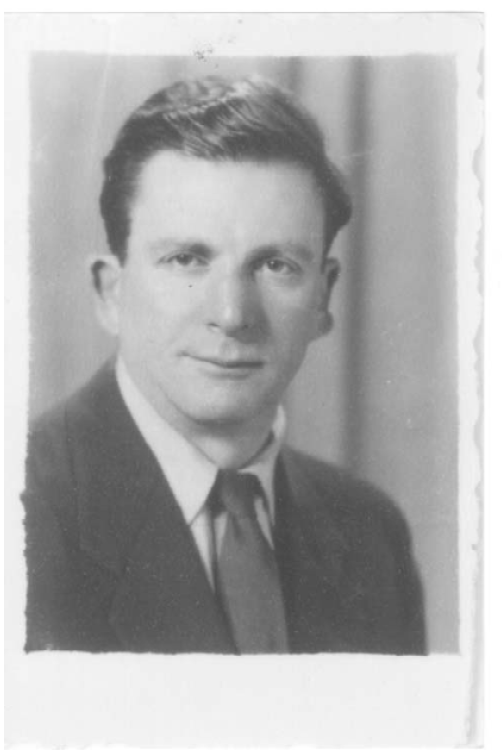
Ted Grant in 1949
Behind the Stalin-Tito Clash: Yugoslavs too Independent
The sensational expulsion of the Yugoslavian Communist Party from the Cominform1 and the open breach between Moscow and Belgrade has aroused a lively discussion in the ranks of the working class. What lies behind these sensational events? That is the question everyone is asking. Only political children accept the statement issued by the Cominform as to the basis of the dispute.
Whatever it is, however, it must be of tremendous importance for the Stalinists to precipitate the open breach, which amounts to a considerable diplomatic and political setback.
The conflict will undoubtedly have wide repercussions in the Communist Parties on an international scale. It marks a new stage in the development of international Stalinism which must be closely followed by revolutionary and militant workers.
The struggle must have been going on behind the scenes for a considerable time. Moscow would only have brought the question out into the open when it had failed to gain control of the Yugoslav Communist Party, when the Russian secret police, the MVD, in Yugoslavia had suffered a decisive defeat; when it was considered no longer possible to win Tito or his supporters; and probably, when Tito was gaining support for his policy against Moscow in the other Balkan Communist Parties. This latter event would be the most potent factor in arousing the hatred and fear of Moscow.
The real issues of the dispute come out only covertly. What appears to be at stake is the demand by the Russian bureaucracy in Moscow for complete and absolute control over the satellite states, even to the smallest detail of internal policy, and Tito’s hostility and opposition to complete subjugation to Russia.
Moscow is faced with two possibilities in the evolution of its policy towards the satellite states in the coming period.
The first is to incorporate these states openly into the USSR as a means of ensuring complete and undisputed control; the second is to accept the nominal independence of these states but to try so to organize their internal regimes and arrange their relations with each other as to ensure that the real control is centered in Moscow.
The first policy has considerable disadvantages in that it would violate the national aspirations of the people of the border states and meet with widespread opposition, not only from the broad mass of the people, but even from the ranks of the Communist Parties themselves. It could only be carried out after long preparation and the assurance of one hundred percent state domination centrally and in the localities by the Russian Stalinists. To carry it out with any measure of force would arouse the hostility of the whole of the European working class.
Stalin’s Great Russian Chauvinism
The second policy would not ensure such complete subjugation and control of the border states, but it has certain advantages in that the real control would rest in Moscow while the nominal independence of these countries could be used to diplomatic and economic advantage. It would still be possible to prevent the federation of the border states, strengthening their relative independence in relation to Moscow.
The whole history of Stalinism—of Great Russian chauvinism—and especially the most recent conflicts of policy, indicate that Stalin will fight with every possible weapon to prevent the creation of independent groups of states within the Eastern European countries.
A key to the conflict is given in the repeated demand from Tito for the Federation of Bulgaria, Albania, and Yugoslavia, and his reported ambitions for a federation of the Balkan countries. The importance of this policy as an issue in dispute is seen in the fact that the Yugoslav Communist Party has restated its Balkans federation policy immediately following on the heels of its expulsion. It must be remembered that Dimitrov2 was recently hauled over the coals by Moscow for advocating a federation. In a federation of the three countries, Yugoslavia would obviously play the dominant role.
Such a federation at the present time would undoubtedly result in a strengthening of the Communist Parties of these countries and their states as against the domination of Moscow. It is, therefore, one policy which Moscow will fight with every weapon it can muster until, and unless, it is assured of absolute control through puppets.
In the statement of the Cominform, as quoted in the Daily Worker of June 30th, they say:
The leadership of the Yugoslav Communist Party is carrying out a policy unfriendly toward the Soviet Union and to the All-Union Communist Party. In Yugoslavia an unworthy policy of belittling Soviet military experts and discrediting the Soviet Army has been permitted. Soviet civilian specialists in Yugoslavia have been subjected to a special regime, on the basis of which they were put under the surveillance of State security organs and subjected to shadowing. The representative of the All-Union Communist Party (Bolsheviks) at the Information Bureau, Comrade Yudin, and a number of official representatives of the Soviet Union in Yugoslavia, were subjected to the same shadowing and supervision on the part of the State security organs of Yugoslavia.
All these and similar facts prove that the leaders of the Yugoslav Communist Party have taken up an attitude unworthy of Communists, on the basis of which the Yugoslav leaders began to identify the foreign policy of the USSR with the foreign policy of the imperialist powers and behaved towards the Soviet Union in the same manner as toward the bourgeois states. Precisely as a consequence of that anti-Soviet attitude, slanderous propaganda—borrowed from the arsenal of counterrevolutionary Trotskyism—on the degeneration of the All-Union Communist Party, on the degeneration of the Soviet Union and so on has become current in the Central Committee of the Communist Party of Yugoslavia.
The same issue of the Daily Worker quotes the reply of Tito and Co. to the accusation that Russian “specialists” were shadowed, as follows: “This is a definite lie … it is a definite lie that anybody was followed. From the liberation until today all members of the Party have given full cooperation to Soviet citizens.”
The Daily Worker did not finish the quotation and in this it both deliberately misinformed its readers, and indicated that its editors were not prepared to state the case for the Yugoslavs fairly and objectively. Already they had taken sides in the dispute as mere Russian hacks. The Yugoslav Communist Party statement went on to declare that: “On the contrary, it is absolutely true, as pointed out in our letter of April 13th, that from the time of the liberation until today members of the Soviet intelligence service attempted without consideration to recruit Yugoslavs.” Let the editors of the Daily Worker explain to its readers the omission of this fundamental part of its brother Party’s reply.
The facts are that the Stalinist military and “civil” specialists in Yugoslavia, as in all other satellite countries have, or seek, what amounts to extraterritorial rights. The apparatus of the MVD is built to ensure the carrying out of Russian policies and the elimination of anti-Stalinist elements. But it seems that Tito was not prepared to give Stalin freedom to build an independent military and police apparatus which could be used against himself and the other members of the Yugoslav Communist Party who supported the orientation of achieving a large measure of independence from Moscow.
The Daily Worker was guilty of a further distortion. In printing Tito’s protest against accusations that there had been no elections in the Yugoslav CP, they had refused to print the reply that Stalin’s party was no better. “As for the fact that in a few sections there have been no elections, this was caused only by wartime conditions. It has been the case in many parties including the Russian Bolshevik Party.”
That the Stalinist secret police have been defeated is indicated by the complaints in the Cominform statement, both as regards the supervision of Russian “specialists” and by the demands for democracy in the Yugoslav CP.
The Yugoslav pupils seem to have learned too well from the Russian master. They got in first and expelled Stalin’s stooges from the Party. It cannot be excluded that the recent execution of leading members of the Yugoslav Communist Party as “British agents” was another example of the Stalinist method of eliminating political opponents. A little Balkan version of the Moscow Trials.
The Cominform declaration that the “Yugoslav leaders began to identify the foreign policy of the USSR with the foreign policy of the imperialist powers …” is clear evidence that the Yugoslavs were objecting to the demands of the Russians, which they considered to be in violation of the interests and national aspirations of the Yugoslavs.
Lenin Opposed Stalin On National Question
The tendency of Stalin to Great Russian chauvinism is nothing new. He has been built up as the great “Leninist authority” on the national question. In fact, one of the last struggles which Lenin conducted against Stalin before he died was precisely to oppose Stalin’s bureaucratic policy towards national minorities. But this, like Lenin’s last letter to the Bolshevik Party demanding the removal of Stalin from the position of General Secretary of the Party, has been hidden from the rank-and-file communists until this present day. This tendency, against which Lenin fought, became more pronounced after his death when Stalin succeeded in usurping complete control. During the great purges, the entire governments of national republics were wiped out, massacred, as part of Stalin’s policy of national oppression. Tito appears to have learned some lessons from the purges.
If the leaders of the Yugoslav Party have indeed criticized Moscow as the Cominform statement alleges, with arguments “borrowed from the arsenal of counterrevolutionary Trotskyism—on the degeneration of the All-Union Communist Party, on the degeneration of the Soviet Union and so on …” we can only hope that some spark of light has penetrated the ranks of the Yugoslav Communist Party. One thing we know: Tito is no Trotskyist. Organizationally and ideologically he is the enemy of Trotskyism. At the period of the liberation of Yugoslavia, Tito was responsible for the physical annihilation of the “Trotskyists”.
If the pressure fails to take effect, and Tito refuses to capitulate, Stalin may be compelled to come to some agreement.
Even now, far from attacking the real crimes of the Stalinist bureaucracy, it appears that Tito will try to arrive at some compromise. Experience teaches that Stalin will stop at nothing to wipe out the opposition of the character with which he is now faced in Yugoslavia. The whole monstrous apparatus of Russian propaganda will be turned against the leaders of the Yugoslav regime. The miserable Stalinist hacks in this country, who only yesterday were blazoning Yugoslavia, Tito, and his achievements in their press, will now turn their pens against the regime to undermine it and denigrate its leaders.
For the first time, and only in order to discredit the dissident Tito and his regime, the Stalinists now blurt out some truths. Criticisms that Trotskyists have made of the regime in Yugoslavia, are now revealed as true by the Stalinists themselves. The Cominform statement says:
Inside Yugoslavia the Party does not have any internal party democracy, elections are not held, there is no criticism or self-criticism. The Central Committee of the Party … consists in its majority not of elected but co-opted members … It is quite intolerable that in the Yugoslav Communist Party the most elementary rights of party members are being trampled upon, that the slightest criticism of the incorrect way in which things are run in the Party is followed by grave repressions. The Information Bureau regards as disgraceful such facts as the expulsion from the Party and arrest of members of the Central Committee Comrades Zujovic and Hebrang, because they dared to criticize the anti-Soviet attitude of leaders of the Yugoslav Communist Party and to advocate friendship between Yugoslavia and the Soviet Union. Such an ignominious, purely Turkish [!!] terrorist regime cannot be tolerated by the Yugoslav Communist Party … the leaders of the Yugoslav Communist Party, are infected by excessive ambition, haughtiness, and conceit.
If ever there was a case of a pot calling the kettle black, here it is! Tongue in cheek, the Moscow bureaucracy attacks Tito for the lack of democracy. This bureaucracy which murdered practically all the leaders of the October Revolution, which killed and exiled millions to Siberia for opposition to their regime, which is so contemptuous of the rights of the rank and file, that in violation of the Constitution, they have not bothered to hold a Party Conference in Russia for nearly ten years. The last Congress of the Russian Communist Party was held in October 1938. In Lenin’s time the Congress was held at least once a year, even during the Civil War.
Any who dare offer a criticism of Stalin are soon on the road to Siberia or destined to die at the hands of a hired assassin. Tito’s regime is probably a model of democracy compared to the Russian regime, which is the most totalitarian and bureaucratic in the whole of history.
Some of the economic criticisms are undoubtedly correct. They repeat, in a distorted way, the criticism which Trotsky made of Stalin’s policy from 1923 to 1927. First, that Tito underestimated the kulak elements in the villages, and the danger which arises from this; then, after criticism, reversed his policy and proceeded to nationalize small shops and other small industries and to take action in the villages before the economic basis had been prepared. Precisely the way Stalin proceeded! From opposing collectivization to “liquidating the kulaks as a class” and introducing 100% collectivization. The bureaucrats in Moscow and in the Cominform must have necks of brass to make the criticism that there is no nationalization of the land in Yugoslavia. This is a correct criticism. But it happens that they have not nationalized the land in a single one of the satellite states either.
The question immediately springs to mind: why were the facts now enumerated by the Cominform concealed for years? Why is it revealed only when Tito refuses to bow the knee to Stalin and uses Stalin’s tricks against him? In place of Stalin’s MVD, Tito has an efficient instrument of his own and is arresting Stalin’s stooges, apparently on charges of being in the pay of British and American imperialism! It may even be true that in the circles of the Yugoslav CP, Marshall Tito, while he does not dare bring this into the open, has been secretly denouncing the degeneration of the Russian Communist Party and regime.
In the past, Moscow succeeded in asserting its will, and removing or destroying the leadership of national sections without a serious crisis. The history of the Comintern is saturated with the bureaucratic elimination of Stalin’s opponents and agents who have been sacrificed in the interests of the bureaucracy.
In Russia, every member of the Central Committee of the Russian Communist Party who was in the leadership of the revolution from 1917 to 1921—every member other than those who died at the hands of the capitalist counterrevolution or by natural means—has been shot or otherwise driven to death. Madame Kollontai and Stalin are the sole survivors of the 24 members.
The Central Committee of the Polish Communist Party and Young Communist League were massacred to a man when living in Russia because of illegal conditions, not once but twice during the late 1930s.
These purges took place without great disturbance. But once the national parties have control of their own state apparatus, all the levers of finance, economy, the military, and the police, the inevitable effect of such a transformation is to strengthen the position of the national leadership and to create conditions of independence from Moscow.
The importance of the present conflict lies in the fact that it is the first important crack in the international front of Stalinism since the end of the war. It is bound to have profound effects on the rank-and-file members of the Communist Parties throughout the world, especially in Western Europe and Britain. It is the beginning of a process of differentiation within the Communist Parties, which in the long run will lead to splits.
The extension of the power of the Russian bureaucracy further west from the Russian borders creates new problems for them. While temporarily strengthening them, in the long run it will undermine their position.
It is clear that any Leninist must support the right of any small country to national liberation and freedom if it so desires. All socialists will give critical support to the movement in Yugoslavia to federate with Bulgaria and to gain freedom from direct Moscow domination. At the same time, the workers in Yugoslavia and these countries will fight for the installation of genuine workers’ democracy, of the control of the administration of the state and of industry as in days of Lenin and Trotsky in Russia. This is impossible under the present Tito regime.
For an independent socialist soviet Yugoslavia within an independent socialist soviet Balkans. This can only be part of the struggle for the overthrow of the capitalist governments in Europe and the installation of workers’ democracy in russia.
Communism means the widest possible freedom and democracy for the people. Without the participation and control of the workers there can be no transition to socialism. These developments in the Balkans are a symptom of the real situation which exists in Russia and the Eastern states. The sole solution lies in a genuinely democratic Soviet regime with full autonomy and freedom for the national states within the boundaries of a socialist federation of states.
[1] The Cominform—The Communist Information Bureau—was established following the March 1947 “Truman Doctrine” whereby US President Truman launched an “ideological and economic crusade against communism.” This included the Marshall Plan of economic aid for Europe which had as one aim to assist the recovery of capitalism in Eastern Europe. The Cominform was founded in Warsaw in September 1947 primarily to consolidate the domination of the Russian bureaucracy over their “fraternal” allies in Eastern Europe.
[2] Georgi Dimitrov, 1882–1949—Premier of Bulgaria from 1946–49. Secretary of the Communist International from 1934 to its dissolution by Stalin in 1943.
The Rise and Fall of the Communist International
The Third International has been officially buried. In the most undignified and contemptible fashion it would be possible to conceive, it has passed off the stage of history. Hurriedly, and without consultation with all the adhering parties, not to speak of the rank and file throughout the world, without any democratic discussion and decision, as the result of the pressure of American imperialism, Stalin has perfidiously abandoned the Comintern.
To understand how it is that this organization which aroused the terror and hatred of the whole capitalist world, has come to such an inglorious end at the bidding of capitalism, it is necessary to review briefly the stormy rise and even stormier decline of the International. The decree for its dissolution was merely an acknowledgement of what has long been known to all informed people; that the Comintern as a factor making for world socialism was dead and had departed forever from its original aims and purposes. Its demise was predicted and foreseen long in advance.
The Third International grew out of the collapse of capitalism in the last war. The Russian Revolution sent a wave of revolutionary fervor through the ranks of the working class throughout the world. To the war-weary, disillusioned, and embittered masses, it came as a message of hope, of inspiration and courage; it showed the way out of the bloody chaos into which capitalism had plunged society. It was born as a direct consequence of the betrayal and breakdown of the Second International, which supported the ruling classes in the last war.
The breakdown of imperialism and capitalism was signalled by the revolutions in Germany, Austria, Hungary, revolutionary situations in Italy, France, and even Britain. The specter of socialist revolution hung all over Europe. The memoirs and writings of nearly all the bourgeois politicians of that time bear witness to the despair, the lack of confidence of the bourgeoisie in the face of the fact that they had lost control of the situation. Social democracy saved capitalism.
The powerful trade union and socialist bureaucracies placed themselves at the head of the upsurge of the masses and diverted it into harmless channels. In Germany, Noske1 and Scheidemann conspired with the junkers and capitalists to destroy the revolution. The soviets of workers, soldiers, sailors, peasants, and even students, which had issued from the November revolution of 1918, held power in their hands. The social democrats handed the power back to the capitalists.
Gradually, slowly, peacefully, as their theoretical conceptions explained it, they would transform capitalism into socialism. In Italy, by 1920 the workers had seized the factories. Instead of leading the workers to the conquest of power, the Socialist Party bade them cease “unconstitutional” procedure. So it was throughout Europe. The results of this program are evident today: the worst tyranny and the bloodiest war in the history of capitalism. But precisely because of the breakdown of international socialism in the Second International, which had betrayed Marxism, the Third International was formed.
As early as the beginning of the last war (First World War) Lenin had courageously issued the call for the Third International. The Third International was formally inaugurated in March 1919. Its declared aims and objects were the overthrow of world capitalism and the construction of a world chain of united soviet socialist republics to join up with the USSR, which itself was not conceived as an independent entity but merely as the base for the world revolution. Its fate would be determined and was bound up with the fate of the world revolution.
The formation of the Third International swiftly led to the creation of mighty communist parties throughout the most important countries in the world. In Germany, France, Czechoslovakia, and other countries, communist parties with a mass membership were created. In Britain a small communist party was formed which wielded considerable influence. The success of the world revolution in the next period seemed assured by the development of events. The communist parties in Europe were steadily increasing in numbers and influence at the expense of the social democracy.
The last war had not succeeded in solving any of the problems of world capitalism. In fact it had aggravated them. Capitalism had broken down at its “weakest link” as Lenin expressed it. The attempts to destroy the young Soviet Republic by the wars of intervention had completely failed. German capitalism, the mightiest in Europe, found itself stripped of its resources, part of its territory, burdened with staggering reparation payments, and generally placed in an impossible position. British and French imperialists, the “victors” in the last world war, were in a position fundamentally not much better.
Encouraged by the Russian Revolution, the colonial and semicolonial masses were stirring and preparing to revolt. The masses at home were restless and uneasy, and the economic position of Anglo-French imperialism had worsened considerably in comparison with that of Japanese and American capitalism. It was on this international background that the crisis broke out in Germany in 1923. Germany, with her high productive capacity, was crippled by the restrictions imposed by Versailles2 and had now become the weakest link in the chain of world capitalism.
The failure of Germany to pay the installments on the reparations resulted in the French capitalists marching into the Ruhr. This helped to complete the collapse of the German economy, and the German bourgeoisie endeavored to unload the burdens onto the shoulders of the working and middle classes. The mark fell in value from 20 to 40 to the pound in January, to 5 million in July, and 47 million at the end of August. The indignant German masses turned towards communism.
As Brandler, the then leader of the Communist Party, stated at the meeting of the Executive Committee of the Comintern:
There were signs of a rising revolutionary movement: We had temporarily the majority of the workers behind us, and in this situation believed that under favorable circumstances we would proceed immediately to the attack …
But unfortunately the leadership of the International failed to stand up to the test and take advantage of the opportunity. Success in Germany would inevitably have led to victory throughout Europe. But as in Russia of 1917, so in Germany of 1923, sections of the leadership vacillated.
Stalin, with his organic opportunism, urged that the German party be “curbed” from taking any action. The result was that the favorable opportunity to take power in Germany was missed and the communists in Germany suffered defeat. For similar reasons the revolution in Bulgaria also suffered shipwreck. But the defeats of the revolution in Europe caused by the failure of the leadership inevitably led to serious consequences. As Lenin had written, urging the necessity to prepare for the insurrection, in Russia in 1917: “The success of the Russian and world revolution depends upon two or three days’ struggle.”
The failure of the world revolution and the isolation of the Soviet Union, taken in conjunction with its backwardness, the weariness and apathy of the Soviet masses who had gone through years of war, terrible privations, and suffering during the course of the civil war and the intervention, their disillusionment and despair at the failure of their hopes of aid from the workers of Europe: all this led inevitably to reaction within the USSR.
Reflecting at the time, perhaps unconsciously, the interests of the reactionary and conservative bureaucracy, which was just beginning to raise itself above the Soviet masses, Stalin for the first time in 1924 came forward with the utopian and anti-Leninist theory of “socialism in one country.” This “theory” sprang directly from the defeat which the revolution had suffered in Germany. It indicated a turning away from the principles of revolutionary internationalism on which the Russian Revolution had been based and on which the Communist International was founded.
Stalin, at the funeral of Lenin in January 1924, from force of habit, following in the tradition of the Russian Revolution declared: “In leaving us, Comrade Lenin enjoined us to be faithful to the Communist International. We swear to Thee, Comrade Lenin, that we shall dedicate our lives to the enlargement and reinforcement of the union of workers of the whole world, the Communist International.” [Quoted in Trotsky’s Stalin, Chapter 11, 523] At that time he had not the slightest notion of whither the theory of socialism in one country would lead the Soviet Union and the Comintern.
The history of the Comintern since those days has been largely bound up with the fluctuating policies of the bureaucracy of the USSR. Lenin had insistently linked the fate of the Soviet Union with that of the world working class, and principally of its vanguard, the Comintern. Even the oath of the Red Army pledged the red soldiers to loyalty to the international working class. Indeed, the Red Army was not regarded as an independent “national” force, but as one of the instruments of the world revolution.
Of course, all this has long since been altered by Stalin. Trotsky, in conjunction with Lenin who, in his last years, viewed the developing situation with alarm, had already begun the struggle against the bureaucratization of the Bolshevik Party and the Soviet state in 1923. Lenin was warning of the dangers of degeneration which threatened the Soviet state.
On the background of the growing reaction, nationally and internationally, the struggle between the internationalists and the Thermidorians3 entered into an acute stage. Trotsky, in alliance with Lenin, had demanded the restoration of complete democracy within the Bolshevik Party and the soviets. Lenin, in pursuit of this objective, had demanded the removal of Stalin from the post of General Secretary of the party because he had become the focal point around which the bureaucracy was crystallizing.
After Lenin’s death, Zinoviev, Kamenev4 and Stalin, “the troika” secured a decision disregarding Lenin’s advice by the Central Committee and commenced a campaign against Lenin’s ideas which were being put forward by Trotsky, with the spurious invention and legend of “Trotskyism.” The fate of the Comintern was linked with the fate of the Bolshevik Party of the Soviet Union which, through its prestige and experience, was naturally the dominant force in the International.
The transition from the policy of world revolution to that of socialism in one country expressed a sharp turn to the right in the Comintern. In Russia, Zinoviev and Kamenev were forced into opposition by the anti-Marxian policy now being developed by Stalin. They were thrust into an alliance with Trotsky and his supporters. Stalin, together with Bukharin, opposed the policy of industrializing Russia through a series of five-year plans suggested by the Left Opposition led by Trotsky and came out with his famous aphorism at the plenary meeting of the Central Committee in April 1927 that “to attempt to build the Dnieperstroy hydro-electric station would be the same thing for us as for a muzhik5 to buy a gramophone instead of a cow.” [Quoted in Trotsky’s The Revolution Betrayed, Chapter 2]
As late as the end of 1927, during the preparations for the Fifteenth Party Congress, whose task was to expel the Left Opposition, Molotov said repeatedly, “We must not slip down into poor peasant illusions about the collectivization of the broad masses. In the present circumstances it is no longer possible.” [Quoted in Trotsky’s The Revolution Betrayed, Chapter 2] Inside Russia the policy was to allow the kulaks (rich peasants) and the Nepmen (capitalists in the towns—so-called after the New Economic Policy of 1921), full scope for economic development. This policy was perfectly typified by the slogan coined by Bukharin with the full support of Stalin, given out to the peasantry: “Enrich yourselves!”
The policy of the Comintern was now pushed far to the right with the preoccupation of Stalin to find allies to “defend the Soviet Union from attack.” The Comintern was already being reduced to the role of a border guard. The disagreements within the Bolshevik Party and the International flared up over the question of the Chinese Revolution and the situation in Britain. In China during 1925–27 the revolution was stirring up the millions of Asia into action. The Comintern, instead of relying on the workers and peasants to carry through the revolution, as was the Leninist policy in Russia, preferred to rely on the Chinese capitalists and generals.
The Left Opposition warned of the consequences of this policy. The Chinese Communist Party was the sole workers’ party in China and had a dominating influence over the working class; the peasantry were looking towards the example in Russia to show them the way out of their centuries-long suffering at the hands of the landlords, through the seizure of the land. But the Comintern stubbornly refused to take the road of working-class independence which Lenin had insisted on as the prerequisite for communist policy in relation to the bourgeois-democratic and anti-imperialist revolutions in the East.
Meanwhile, a similar policy was pursued in Britain, where the masses were undergoing a process of intense radicalization. As a means of struggling against intervention against the Soviet Union, the Russian trade unions made an agreement with the General Council of the TUC. The tendency towards revolutionary developments in Britain is seen in the fact that a million members, a quarter of the trade union membership, were organized in the Minority Movement.6 Trotsky, analyzing the situation in Britain, had predicted the outbreak of a general strike.
The task of the Communist Party and the Communist International should have been to prepare the workers for the inevitability of a betrayal on the part of the trade union leadership. Instead, they sowed illusions in the minds of the workers, especially as the trade union bureaucrats had covered themselves with the agreement with the Russian trade unions, whose prestige they utilized as a cloak. After the betrayal of the 1926 general strike by the trade union bureaucracy, Trotsky demanded that the Russian trade unions should break off relations with the TUC. This Stalin and the Comintern refused to do.
After using the Anglo-Russian Committee for as long as they needed, more than a year after the General Strike, the British trade union leadership broke off relations. The Comintern let out a howl that they had been betrayed. But meanwhile, the young Communist Party of Great Britain, which should have increased its membership by leaps and bounds as a result of these great events, was paralyzed and disoriented by the policy of the International, was completely discredited, and dwindled in influence among the masses. These further defeats of the International, due directly to the policy of Stalin and the bureaucracy, at first sight paradoxically, increased the power of the bureaucracy within the Soviet Union.
The Soviet masses were further disheartened and disillusioned by these new defeats of the international proletariat and suffered a further decline in spirits. The defeats, which had been a direct consequence of the policy of Stalin and the bureaucracy, further strengthened its hold on the Soviet Union. The Left Opposition, led by Trotsky which had correctly analyzed and forecast these developments, was now expelled from the Bolshevik Party and from the International.
The internal results of Stalin’s policy now began to bear fruit in the alarming growth of the strength and influence of the kulaks and of the Nepmen. The Soviet Union stood on the brink of disaster. In panic and terror, Stalin and the bureaucracy were compelled to adopt a caricature of the very policy for which Trotsky and his co-thinkers had been expelled. In Russia the Five Year Plans against which Stalin had so strenuously fought were introduced.
It is on the basis of this planned production that the Soviet Union achieved its greatest successes and on which the present day USSR bases itself in war. Meanwhile, the panic turn to the left internally was reflected in a panic turn to the left internationally. Stalin had burned his fingers badly in his attempts to lean on capitalist elements in China and to conciliate social democracy. Now he veered the International sharply in the opposite direction. In violation of its statutes, the International did not hold a conference for four years. A new conference was called which introduced officially the program of the Communist International. It also proclaimed the end of capitalist stability and the beginning of what was termed the “Third Period.” This was supposed to usher in the period of the final collapse of world capitalism. At the same time, the social democracy, according to the once-famous (but now buried) theory of Stalin, was supposed to have transformed itself into “social fascism.” No agreements were now possible with “social fascists” who constituted the main danger confronting the working class and must be destroyed.
It was just at this period that the unprecedented slump of 1929–33 affected the world. In particular it hit Germany. The German workers were thrust into a position of degradation and misery and the middle classes were ruined. Germany’s unemployment figure rose steadily till at the peak it reached 8,000,000. The middle class, having failed to receive anything from the revolution of 1918, and disappointed with the failure of the communists in 1923 to take power, now in anguish and despair began to look for a solution to their problems in a different direction.
Subsidized and financed by the capitalists, the fascists began to secure a mass base in Germany. In the elections of September 1930, they secured nearly six and a half million votes. Despite their expulsion from the Communist International, Trotsky and his followers still considered themselves as part of it and insistently demanded that they be allowed to return to the ranks. At the same time, they subjected the suicidal theory, which had now been adopted by the Comintern, to a sharp criticism. In place of it they demanded a return to the realistic Leninist policy of the united front7 as a means of winning the masses in action and, through their own experience, to communism.
With the victory of Hitler at the polls Trotsky sounded the alarm. In a pamphlet entitled The Turn in the Communist International—the Situation in Germany he issued a signal for a campaign, which was carried on for three years by the International Left Opposition of the Comintern, as the Trotskyists looked on themselves. In Germany, France, USA, Britain, in far away South Africa, and in all countries where they had groups, the Trotskyists conducted a campaign demanding that the German Communist Party set into motion a campaign for a united front with the Social Democrats to prevent Hitler from coming to power.
At the direct instructions and bidding from Stalin and the Comintern, the German Communist Party denounced this policy as a counterrevolutionary “social fascist” one. They insistently fought against social democracy as the “main enemy” of the working class and argued that there was no difference between democracy and fascism. In September 1930, the Rote Fahne, organ of the German CP proclaimed:
Last night was Herr Hitler’s greatest day, but the so-called election victory of the Nazis is the beginning of the end. [September 15, 1930]
Right throughout these years the Comintern continued its fatal course. When Hitler organized a referendum in 1931 to oust the Social Democratic government in Prussia, at the direct insistence of Stalin and the Comintern the German communists voted with the Nazis against the social democrats. As late as May 1932, the British Daily Worker could proudly indict the Trotskyists for their policy in Germany thus: “It is significant that Trotsky has come out in defense of a united front between communist and social democratic parties against fascism. No more disruptive and counterrevolutionary class lead could possibly have been given at the time like the present.”
Meanwhile, Trotsky had written four pamphlets and dozens of articles and manifestos; everywhere the international Trotskyists explored every avenue to exert pressure on the Comintern to change its policy. In vain. In January 1933 Hitler was enabled to take power without any organized opposition whatsoever in a country with the most highly organized working class and with the strongest Communist Party outside of Russia.
For the first time in history, reaction was enabled to conquer power without any resistance on the part of the working class. The German CP numbered 6,000,000 supporters, the Social Democracy numbered 8,000,000—together they were the mightiest force in Germany. By this betrayal, the German CP was doomed forever.
But the Comintern was far from recognizing the nature of the catastrophe. Instead, it solemnly endorsed the policy of the German CP and of the International as having been perfectly correct. An organization which cannot learn from the lessons of history is doomed. As a force for world socialism, the Communist International was dead. The International Left Opposition broke away and proclaimed the necessity of a new international. But what was apparent to the vanguard, who had abandoned the attempt to reform the Comintern, could not be apparent to the broad masses. Only great events could teach them.
The Communist International continued to carry on this false policy right up to 1934. When the fascists in France, encouraged by the successes of fascism in Austria and Germany, conducted armed demonstrations for the overthrow of the Liberal government and parliament, the CP issued orders to demonstrate with them. But now the full danger which Hitler represented to the Soviet Union was apparent to everyone. Stalin and the bureaucracy became panic stricken. Contemptuous and cynical of the capacity of the Comintern as an instrument of world revolution, Stalin more openly converted it into an instrument of Russian foreign policy.
An organization in class society which ceases to represent the working class inevitably falls under the pressure and influence of the bourgeoisie. Stalin, in his search for allies, now turned to the bourgeoisie of Britain and France. The “Popular Front” policy was initiated and endorsed at the last Congress of the International, held in 1935. This policy of coalition with the Liberal capitalists is one against which Lenin had struggled all his life. It represented a new stage in the degeneration of the Comintern and the first workers’ state.
With the rise of Hitler, again due to the policies of Stalin, the stranglehold of the bureaucracy within the Soviet Union was further increased. Higher over the Soviet masses has the bureaucratic caste raised itself and increased its power. But this progressive degeneration has had qualitative changes. From merely being incapable of insuring anything but defeats for the world working class, Stalinism has become opposed to the workers’ revolution in other countries. The Moscow Trials, the murder of the old Bolsheviks, the purges, the murder and exile of tens of thousands of the flower of the Russian communist workers, completed the Stalinist counterrevolution within the Soviet Union.
Events in France and Spain8 are fresh in every revolutionary’s mind. The Comintern played the main role in destroying the revolution which could have been accomplished. Indeed, it revealed itself as the fighting vanguard of the counterrevolution. The defeats of the world working class inevitably led to the new world war. Ironically, the war was ushered in by a pact between Hitler and Stalin. Thus, Stalin dealt new blows to the world working class and the Comintern. It now executed a somersault and conducted a campaign for peace in the interests of Hitler, with a skillful counterfeit of a “revolutionary” policy.
As Trotsky forecast in his prediction of the Stalin-Hitler agreement in an article written in March 1933:
The fundamental trait of Stalin’s international policy in recent years has been this: that he trades in the working-class movements just as he trades in oil, manganese, and other goods. In this statement there is not an iota of exaggeration. Stalin looks upon the sections of the Comintern in various countries and upon the liberating struggle of the oppressed nations as so much small change in deals with imperialist powers. When he requires the aid of France, he subjects the French proletariat to the radical bourgeoisie. When he has to support China against Japan, he subjects the Chinese proletariat to the Kuomintang. What would he do in the event of an agreement with Hitler? Hitler, to be sure, does not particularly require Stalin’s assistance to strangle the German Communist Party. The insignificant state in which the latter finds itself has moreover been assured by its entire preceding policy. But it is very likely that Stalin would agree to cut off all subsidies for illegal work in Germany. This is one of the most minor concessions that he would have to make and he would be quite willing to make it. One should also assume that the noisy, hysterical, and hollow campaign against fascism which the Comintern has been conducting for the last few years will be slyly squelched.
This policy of Stalin and the “stinking corpse” of the Comintern suffered irretrievable ruin when the Nazis invaded the Soviet Union. The Comintern had to execute a right about turn and convert itself once again into a doormat for Roosevelt and British imperialism. But with the increased dependence of Stalin on American and British imperialism, has come the increased pressure on the part of capitalist “allies.” American imperialism especially has demanded the ending of the Comintern as a final guarantee against the danger of social revolution in Europe after the downfall of Hitler.
The long drawn-out pretense is over. Stalin has dissolved the degenerate Comintern. In doing so he openly announces his stepping over to the side of the capitalist counterrevolution, as far as the rest of the world is concerned. But the imperialists, in forcing Stalin to make this trade in return for concessions and bargains on their part, have not understood the consequences this will have. It cannot and will not prevent the coming of new revolutions throughout the world. In the less than two decades since the beginning of its degeneration, the Comintern has ruined many favorable situations in many countries.
The coming decades will witness many revolutions with the breakdown and collapse of capitalism. Even the violently disturbed epoch of the period between the wars will seem comparatively tranquil compared to the period which lies ahead. On this background of storms and upheavals a real instrument of world revolution will be created. What the workers lacked in the last decades, outside Russia, was a workers’ Bolshevik Party and a Bolshevik leadership. The great days of the Comintern of 1917–23 will live again. The growth in support for the ideas of Marxism internationally, based on the traditions of Bolshevism, the rich experience of the past, and learning the lessons of defeats of the working class, can once again lead the oppressed to the overthrow of capitalism and to the world socialist republic.
[1] Right-wing SPD leaders. Gustav Noske, as minister of war, organized suppression of the January 1919 uprising of the German workers and sanctioned the murder of Luxemburg and Liebknecht. Philipp Scheidemann became Chancellor in 1919. The Junkers were reactionary Prussian aristocrats who dominated the military and civil service until the 1930s. See: Germany—From Revolution to Counterrevolution by Rob Sewell.
[2] The Treaty of Versailles, signed in 1919, imposed harsh terms on Germany at the end of the First World War.
[3] From Thermidor: a term used to describe political reaction without a social counterrevolution. Derived from analogy with the shift of power in the French Revolution in the month of Thermidor (July) 1794 when the radical Jacobins led by Robespierre were overthrown by a right-wing coup, while leaving the fundamental gains of the (capitalist) social revolution intact. Thus Thermidorians: supporters of political reaction in Russia.
[4] Grigori Zinoviev and Lev Kamenev were Old Bolsheviks. The former was the first president of the Communist International, the later was one-time deputy to Lenin. Both were opposed at the time to the Soviet seizure of power in October 1917. Later, together with Stalin, they blocked the implementation and denied the existence of Lenin’s Testament, which called for Stalin’s removal as General Secretary. Both were executed in the 1936 purge trials.
[5] A Russian term for peasants.
[6] An organization that brought together the left in the British trade unions in the 1920s. It was initiated and largely led by the Communist Party.
[7] The united front was conceived as a temporary agreement between mass workers’ organizations, for action on specific issues, while retaining independence of programs.
[8] Popular front governments were elected in Spain in February 1936 and in France in June 1936. As in Spain, the French workers immediately moved into action, occupying factories, establishing workers’ committees. In both countries the popular front government acted as a strike-breaking force, in Spain opening the way for Franco’s fascist uprising in July 1936.
Stalin Scraps “Internationale”
The announcement of the decision to abolish the Internationale as the anthem of the Soviet Union marks a step of profound and symbolic importance. The step has been hailed with discreet and enthusiastic approval by the capitalist press of Britain, America, and other countries. The formerly openly pro-fascist and anti-Soviet press has revealed its jubilation, the Daily Mail in its leader column pointing out its meaning as the formal end of the “Trotskyist” idea of world revolution.
The scrapping of the Internationale and its substitution by a reactionary national anthem is of course a logical development following the open abandonment by Stalin and the bureaucracy in Russia of the hollow pretense of standing for world socialism by the abolition of the Comintern.1 It marks the consolidation, however uneasy, of the power of the nationalist military cliques in Russia, who are attempting to find a common language and a common basis with the imperialists of the West. It is a further guarantee and reassurance to the capitalist class in Britain and America that so far as the rest of Europe and the world are concerned, Russia now has purely “national” aims and stands on the same side of “law and order,” i.e., capitalist property, as they do. This trend has been well understood by the representatives of the capitalist class not only in the governments but the well-informed businessmen, journalists, etc. In the New York Times of October 31, C. L. Sulzberger writes:
Many Russians [i.e., Russian Stalinist bureaucrats in the Embassy, etc.—EG] with whom the writer has talked frankly discussed the dangers of a communized Germany. They take the view that this would eventually turn in the direction of Trotskyism and might conceivably begin once again, therefore, to foment dangers for the Soviet Union—a possibility which will at all costs have to be avoided.
But the betrayal of the policy for which Marx and Lenin fought all their lives is reflected not only in the abandonment of the struggle for international socialism but in the speeding up of the bureaucratic degeneration of the Soviet Union. The Observer of December 26, 1943, soberly assessing the significance of the new move, remarks:
The abolition of the Internationale as the national anthem of the Soviet Union and its replacement, by a national and patriotic song comes at the end of a year which has seen more fundamental changes in Russia that any since the great revolution. The restoration of an officer corps; the abolition of the political commissars in the army; the adoption by Stalin of the title of Marshall; the dissolution of the Comintern; the restoration of the Russian Church—all this together, now symbolized in the change of the national anthem amounts to little less than a new revolution from above, peaceful and orderly, but profound.
Aside from the reference to a “peaceful” and “orderly” change, which is merely introduced to indicate approval of the change, the comment is fairly shrewd and accurate. All these steps are in a counterrevolutionary direction and favorable to the interests of world imperialism, which is anxiously watching the development of events in the Soviet Union. Stalinism, which represented the interests of the officialdom in Russia, having usurped power from the masses, is now moving at an accelerated pace away from the ideals of the October Revolution. Power has passed from the civil to the military bureaucracy.
The “Communist” Party, faced with this new contemptuous slap in the face to the ideals of socialism, has, as was inevitable, attempted to justify this new betrayal. On the first day following the news, the Daily Worker printed the announcement without comment. They were waiting for the “Party line.” Then they issued a statement which claimed that nothing had been changed. Russia had made its revolution and achieved “socialism” and therefore the Internationale no longer applied, they have argued. Apart from the fact that the idea in making the Internationale the anthem of the Soviet Union was conceived as linking the workers of Russia, and the Soviet Union itself, to the world working class, as part of the struggle for liberation of the world working class, like all the other conceptions of Bolshevism under Lenin’s leadership. The oath of the Red Army (long since changed) pledged the Red Army to serve faithfully the interests of the world working class; and the Red Army was described by Lenin as one of the arms of the Communist International. In any case the flimsy character of the lie is exposed when it is remembered that the Stalinists more than a decade ago falsely announced the lie that socialism had been established. If the Internationale is not necessary now, why was it necessary then?
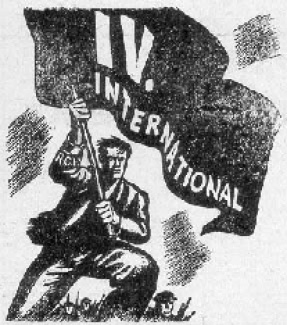
This declaration constitutes a new stab in the back for the Red Army and the world working class. It will prepare the way for new blows on the part of the Stalinist bureaucracy. Nevertheless, it should be welcomed by the advanced worker; as helping to clear the minds of the world working class of any illusion that Stalinism still remains a revolutionary force striving for socialism. It is clear that the banner of socialism, the banner of the Internationale, is now carried by the Fourth International alone. Officially dropped by the traitor Stalinist bureaucrats, it now belongs to us, who proudly adopt the song of the Paris Commune and of the October Revolution, the song of Marx and Engels, the song of Lenin and Trotsky, as our anthem.
[1] The Comintern had been dissolved by Stalin in May 1943.
The Purge of Stalin
The entire capitalist press of the world during the last few weeks has been filled with articles endeavoring to explain the posthumous purge of Stalin. In this they have been followed by the Stalinist and Labor papers. But their explanations have been feeble in the extreme.
It is not a question of personal hatred of Stalin by his lieutenants and colleagues, though this was real enough, nor was it a question of moral revulsion against his crimes. Khrushchev and all the other leaders at present in control of [the] Soviet Union participated with Stalin in all the purges and his other bestial crimes. Not only that, they continued and still continue with the same frame-up methods. When there was a quarrel and struggle for power between different sections of the bureaucracy, between Malenkov-Khrushchev-Bulganin and Beria, and Beria lost out, he was executed and denounced in the same dishonest way as a traitor and agent of imperialism, as Stalin had dealt with his enemies. Beria, like the other leaders, was stained with crimes, but was as much an agent of imperialism as Churchill and Eden are agents of Russia. As head of the secret police he was guilty of the oppression and persecution of millions, but the present leaders share the guilt. And they show that they continue the methods of Stalin by continuing to propagate the fiction of Beria’s treason.
Above all, the fiction is preserved that socialism has been established in the Soviet Union, for the same reason that Stalin originally introduced the myth: the endeavor to fool the broad masses in Russia and the world and to justify and try to perpetuate the dominant and privileged position of the officialdom.
Stalin did not represent himself, as they now pretend, but like every dictator in history, represented a class or stratum of society. Stalin did not gain power by accident, nor establish his tyranny without support. His dictatorship represented not his role as an individual, but the needs of the bureaucratic caste which usurped power from the broad masses.
Historically, Stalin represented the bureaucratic reaction against the revolution. In him individually was personified the interests of the officialdom. This is proved by the fact that all the gains of the revolution except the basic one, state ownership of the means of production and planning, were destroyed in the process of the consolidation of the rule of Stalin. That was the meaning of the countless crimes; and the arbitrary terror of the secret police. Everything achieved under the regime of Lenin and Trotsky has been transformed into its opposite. Nationalism instead of internationalism; inequality and differentiation instead of equality; enslavement and differentiation among the workers in place of workers’ control; national oppression of the republics instead of fraternal and equal relations; a privileged bureaucratic hierarchy in the army, industry, agriculture, police, and civil service. That was the real meaning of the Stalin terror.
The present leaders in the Kremlin claim that they are returning to the methods of Lenin. But they are preserving the basic gains and perquisites of the officialdom.
If there has been a revulsion against the methods of Stalin, that has been for two reasons: the growing pressure of the masses, and the fear of the bureaucracy of a repetition of the personal and arbitrary rule of Stalin. Like every dictatorship which reflects the contradictions within a given society, the Stalin dictatorship ended with the personal megalomania and arbitrary domination of an individual. So it was in ancient Rome, in medieval society, and the maniacal dictatorship of Hitler and Mussolini.
Towards the end of Stalin’s rule he reacted to the growing dissatisfaction and mounting hatred against his regime by preparing for a purge which threatened to compare with the monstrous nightmare of pre-war.
The projected trial of the doctors has set the stage. No one was safe. According to the statements of Khrushchev, Molotov, Voroshilov, Bulganin, himself and other leaders were all threatened by the danger of arrest and execution. It is probable, as the Marxist tendency surmised, that in this atmosphere the tops of the bureaucracy, alarmed at the dangers to the regime as well as their own personal safety, decided to rid themselves of the paranoiac who ruled Russia. It was in the Russian tradition. Just us the nobility at court removed Ivan the Terrible when his madness threatened them, so they decided to remove Stalin, even more terrible in his blood-lust than all the tsars.
Then account must be taken of the changes in Russian society in the past decades, especially the period since the war. The level of industry, science, culture, are immeasurably higher than at the period when the bureaucracy usurped power. Then, Russia was almost at the level of a colony.
In 1927 the working class numbered about 4 million, in great part diluted by illiterate semi-peasants who had just left the villages. Now Russia has a proletariat which is educated and cultured, numbering 40 to 50 millions. And Russia has, though relatively still backward, become the second greatest industrial power in the world. She overshadows the old capitalist powers in Europe and only the colossus of the American continent outstrips her at present.
It was the isolation of the revolution in Russia, and the backwardness of her economy which allowed the bureaucracy to gain control under the leadership of Stalin, who gradually perfected his totalitarian rule as their instrument. But more and more, with the development of the economy, the bureaucracy, which under the given conditions played a relatively progressive role in the past, comes into conflict with the needs of culture and the economy.
In a whole series of speeches which have aroused little comment in the West, Khrushchev and the other leaders of the bureaucratic ruling oligarchy, showed that they recognized the problems and dangers that spring from them. Bureaucratic rule as revealed by those speeches means mismanagement, squandering, corruption, waste, nepotism. It is holding up the full utilization of all the productive forces in Russia, especially the most important of all: man. Arbitrary rule means inefficiency and red tape in industry and agriculture. It retards the development of science and culture, which in their turn react upon the development of the productive forces.
This, too, is recognized by the bureaucracy, and the problems that flow from it. To try and deal with it, with the out-and-out brutal methods of Stalin, would provoke resistance from the masses, and threaten to engulf the bureaucratic regime itself, and would weaken Russia tremendously nationally and internationally. Thus, the problem of the bureaucracy has been how to alleviate the regime, allow a certain leeway for the development of initiative and criticism, while preserving the regime intact.
As distinct from capitalism or any other mode of production, for the full utilization of the possibilities inherent in it, state ownership and planning require democratic participation and control. The masses, with the raising of their level of culture, and standard of living, have become more and more critical of the arbitrary regime. All strata of society, including all levels of the bureaucracy itself, feel the clogging of initiative and enterprise. The delicate mechanism of a mighty industrial state suffers even more than a backward economy the stultifying effects of absolutism.
Democratic control and participation of the masses, free play for discussion, criticism, and enterprise from top to bottom in all spheres of society, especially in industry and agriculture, would mean a much faster and more harmonious tempo of development of the economy. It would mean a big increase in living standards for the masses as well as higher capital production.
But the bureaucracy cannot allow this; to do so would be to abdicate their rule. Like all ruling classes and castes of the past, the bureaucracy wish to have their cake and eat it at the same time. They strive to overcome the abuses and effects of their rule while preserving it intact.
Despite the hysteria of the capitalist and Stalinist scribes in the West, this is not the first time that the endeavor has been made to introduce such a turn. Under Stalin himself in 1936 we had the introduction of the Stalin constitution, which on paper guaranteed all rights and blessings to the population. It followed the little purge of 1934 on … and was succeeded by the insane obliteration of any remote potential of opposition in the mass purges.
To return completely to this policy would be very difficult because of the resistance of the masses. At the same time, the bureaucracy wish to give themselves a certain protection and possibilities of discussion at the top. They wish for democracy, within certain limits, within the top strata of the bureaucracy itself. That is the meaning of the so-called return to “collective leadership,” in place of the “cult of the individual.” So long [as] it does not threaten their position they even wish for a certain amount of initiative from the rank and file. Stalin in his day also endeavored to have this safeguard. He sometimes leaned on the masses as the “father of the people”, and cracked the whip over the bureaucracy and its excesses. But inevitably, the surge from below led to panic [at] the top, and a reinforcement of the bureaucratic straitjacket.
Now, Khrushchev, Bulganin, Molotov, and company wish to introduce “collective leadership” and allow “benevolent criticism” from below in the same way. But the moment this criticism passes beyond the arbitrary excesses of individuals and lower officials in the local areas and threatens to become criticism of the top leadership and the system, they immediately clamp down. Already reports have been published in the press of warnings and threats against criticism of the “party,” and of the regime.
Here it must be remembered, too, that the party is not the same as it was in the early days of the revolution, when it was the party of the workers and peasants, an instrument of their rule. Reflecting this, it was overwhelmingly composed of such elements in its rank and file. Under the leadership of Stalin the bureaucracy transformed the party from an instrument of workers’ rule to a machine of the bureaucracy.
In its formal composition, to the extent of 90 to 95%, it has become a party of officials, secret police, managers, collective farm overlords, army officers, and the aristocracy of labor. The ordinary workers and peasants are conspicuous by their absence. Now, even within this castrated party, the bureaucracy cannot allow real inner party democracy, because it would inevitably [reflect] the upsurge from the workers and peasants outside, and endanger their rule.
A few months back, the capitalist world was mystified by the reprimand which Molotov received for saying that socialism was not yet accomplished in the USSR but lay in the future. To them it was “doctrinaire” and “mystification.” In reality, as happened before under Stalin, the contradiction between the present regime and the ideal of socialism as reflected in the ideas of Marx and Lenin is glaring to any student who reads them conscientiously. Consequently the bureaucracy reinforces the regime on the one hand by terror, on the other by ideological falsification.
However, the significance of their pretense that they were returning to ideas and methods of Lenin, lies in the deep longing of the population as a whole for a return to the methods and traditions of the October Revolution.
In this is foreshadowed the doom of the revamped version of Stalinism. Squirm and wriggle as they may, the bureaucracy cannot escape from the consequences of the contradictions in their system. These tremendous events foreshadow the inevitability of political revolution in the Soviet Union.
Only by an overthrow of the bureaucracy and the restoration of control of the state and of society as a whole by the working class can a way be cleared for a transition regime to evolve in the direction of socialism.
In this crisis is reflected the justification of the struggle of Trotsky and the Left Opposition and the correctness of his basic ideas as to the development of the Soviet Union.
Hungary and the Crisis in the Communist Party
This was written in November 1956 as an open letter to members of the Communist Party of Great Britain, urging them to reconsider their support for the pro-Moscow leadership in the light of events in Hungary.
Comrade of the Communist Party,
You have supported the Communist Party as fighters against capitalism-imperialism, for its overthrow and the realization of socialism; a new system of society without classes or exploitation of man by man or nation by nation.
You believed that the Communist Party and present leadership represented that program, the theory and ideas of Marx and Lenin.
Events have struck blows against that illusion. This is the program which the Communist Party and Communist International were set up to carry out and for which the Russian workers made the October Revolution. But the Russian Revolution degenerated through the usurpation of power by the Stalin clique. All that remains of the great Russian Revolution is the basic gain; the elimination of capitalism, the state ownership of the means of production and its development on the basis of a plan.
But control was filched out of the hands of the workers and the peasants and concentrated into the hands of the bureaucracy: the millions of officials, army officers, managers, party and state functionaries.
Your leaders have admitted the crimes of Stalin under the impact of the Khrushchev disclosures at the 20th Congress. The lack of democracy, the national oppression of the non-Russian peoples, the terror against the working class, the exile of millions to Siberia, the dictatorship of a clique with an unbridled secret police.
This applies and applied not only to Russia itself but to the regimes of Eastern Europe, in which the masses were subjected to mismanagement and plunder, in the interests of the Russian bureaucracy.
Your leaders pretend that these were the mistakes and crimes of one man. This is palpably false for anyone trained in the Marxist method. No dictator represents himself alone, but the interest of a class or stratum of society. Who then did Stalin represent? The workers? Obviously not. He stood, on the contrary, for the forces who carried through a political counterrevolution against the Russian masses, but a counterrevolution on the basis of state ownership; and this terror was not for Stalin’s whim but in the interests of the material needs of these usurping officials. Even today your leaders are hiding the fact that the present leadership in the Soviet Union is still trampling on the program and methods of Lenin.
Lenin’s Program
Lenin summarized his program for workers’ power and its inception as the first steps for a workers’ state, in order to prepare a transition to socialism, in four simple points.
The setting up of soviets, or committees composed of workers, peasants and other representatives of the population, with free and democratic elections to them and the right of recall. No standing army but the armed people. No official to receive a wage higher than that of a skilled workers. Gradually all the tasks to be done in turn by the workers themselves. Every cook should be able to be prime minister. When everyone is a “bureaucrat” in turn no one can be a bureaucrat.
Under Khrushchev, as under Stalin, not a single one of these fundamental points remains in existence in Russia today. The law limiting the wage of officials has long been abolished. The difference between managers and workers is greater than in capitalist countries. The difference in wages and conditions between officers and men in the army is greater than even in the USA. Generals, officers, and managers are a privileged caste, separate and apart from the people. The top clique of officials under Khrushchev, as under Stalin, live like millionaires.
Above all, this can only be maintained by the crushing of democracy and the rights of the working class.
Trotsky urged five-year plan
The achievements of industrialization and the five-year plan (incidentally put forward by Trotsky, and opposed by Stalin, in the early years), demonstrating the superiority of socialist economic methods over capitalism, were carried through despite bureaucratic mismanagement and corruption which hamper and hold back the development of the productive forces.
But state ownership and planning, in order to function efficiently to the maximum extent possible, require the full participation, control, check, and management of the workers and peasants, and only thus can the interests of the workers and peasants be served, and the way be prepared for the transition to socialism and the withering away of the state. The opposite process has taken place in Russia and her satellites. In Poland, Hungary, and other countries of Eastern Europe the Russian bureaucracy, through its local representatives and agents, oppressed the masses by the same arbitrary brutal and terroristic methods.
After more than ten years of Stalinist rule this has culminated in the uprising of the Hungarian masses. This was a magnificent, heroic national struggle, comparable to the Paris Commune and the Russian Revolution itself. Now your leaders are up to their old games. They are desperately trying to deceive you by resorting to the old Stalinist lies and slanders. Yesterday they denounced Tito, Gomulka, Kostov, Rajk, and Slansky as fascists, counterrevolutionaries, imperialist agents, and spies. They have recently been compelled to make abject retractions, and to claim that they have been “honestly mistaken.” Now they are up to their old games again. They use the unholy joy of the capitalist press at the exposure of Stalinist misdeeds and national oppression to try to confuse you. It is true that bloodstained imperialist capitalism has been guilty of terrible crimes against the workers and the peoples: Suez, Kenya, Cyprus and Malaya.
But they are capitalists-imperialists. Their system demands such measures in defense of their profits and privileges. But socialism and workers’ rule demand different methods entirely, otherwise they would not be worthy of the name of socialism. The crimes of Stalinism under its new disguises in Russia, Poland and Hungary are similarly in defense of inequality, national oppression, bureaucracy, inefficiency, terror, and indifference to the needs and aspirations of the masses.
Your leaders lied or, as they claim, were deceived in their previous vituperative attacks—can you believe them now?
Again, the “Daily Worker” lies
All honest members of the Communist Party must ask themselves, as a duty to the struggle of their class for socialism, why these events have taken place and whether their leaders are once again “mistaken.”
It is a definite lie on the part of the Daily Worker and the government of Janos Kadar that this was a fascist movement, counterrevolutionary in its aims. No more than the movement in Poland was fascist. Gero and the other Stalinist bureaucrats provoked this insurrection on the part of the masses. A few stray hooligans or fascist elements such as Joseph Dudasz, whom the Daily Worker featured so prominently, tried to take advantage of the workers’ movement but were immediately arrested and put in jail. This the Daily Worker has not revealed.
As always in great events, as in the Russian Revolution of 1917, these elements intervene in the movement. But the decisive section of the insurrectionary forces in Hungary were from the working class and youth, the factory workers. The elite of the Hungarian masses were and are in the van of the struggle. The amazing capacity of the Hungarian workers to fight against terrible odds is something which places them among the greatest working class fighters in history. Two general strikes and two insurrections in three weeks! Why? To restore capitalism and landlordism! What a dirty lie. The Daily Worker of November 15 gives the lie to all the propaganda of these traitors of socialism, when they list the demands of the workers, before they agree to go back to work. Similar demands were featured by the Daily Worker itself as early as October 27: the demand for a workers’ national guard, immediate negotiations for the withdrawal of Russian troops, the right to strike, and free trade unions.
Hungarian workers’ demands:
Workers’ councils in every factory to establish workers’ management and radically transform the system of state central planning and directing. Wages to be raised immediately by 10 to 15 percent and a ceiling of about 106 a month fixed for the highest salaries. To abolish production norms except in factories where the workers or workers’ councils wish to keep them. Wages and pension demands. Speed up house building. Negotiate with the Soviet Union and other countries on the principle of equality.
Instinctively, the Hungarian masses have tried to adopt the program and policy of Lenin as listed in the demands above.
To say under these conditions that they want capitalism back is a dirty lie of hardened perverters of socialism.
The Daily Worker in its desperate efforts to fool the members and supporters of the Communist Party, has referred to the overthrow of the Hungarian Republic of 1919. What they forget to mention is that this Republic had the overwhelming support of the masses and could only be overthrown by the intervention of foreign troops backed by Britain and France.
Now the foreign troops used against the revolution are troops of Russia, just the opposite to events at that time. The young Hungarian Soviet Republic was overthrown by outside intervention in 1919 before it could consolidate itself. Only foreign intervention could pave the way for a struggle by the White Guards against the Russian Revolution. At this time world imperialism is impotent to intervene, and in fact would be afraid of the victory of the workers in Hungary.
For whom does Kadar speak?
Yet ten years after the revolution has been consolidated in Hungary this is the denouement. The Russian army and the puppet government of Kadar represent Stalinist counterrevolution in Hungary. With the defeat of the government the workers instantaneously organized revolutionary committees of workers, soldiers, students, peasants, even lawyers, so strong was the revolutionary feeling in Hungary. These revolutionary committees were Soviets, but Russian and Stalinist-Hungarian oppression has made the name Soviet stink so much that the masses called them revolutionary committees. These committees, based on the factories, regiments, etc., are the most democratic form it is possible to achieve, yet the first act of the Kadar government after the second treacherous intervention by Russian troops was to order the dissolution of the soldiers’ committees and the appointment of “Commissars” as overlords to the workers’ committees. It is significant that this too the Daily Worker fails to mention or explain!
The Worker contradicts itself when at the same time it is giving currency to the lies about fascist and imperialist agents, it admits the need of basic reform in Poland and Hungary.
How could fascist or imperialist agents have any effect if there were not this justified discontent of the masses against Stalinist absolutism? Even if it were true, the responsibility would be on the shoulders of the Russian, Hungarian, and British CP bureaucracy, which condoned and concealed these crimes. Of course, the imperialist butchers seek to discredit the idea of socialism by using the crimes of the so-called Communist Party.
It is surely clear that the Hungarian masses do not wish to go back to Horthyism and capitalism. But they want to end, once and for all, the domination and bleeding of Hungary for the benefit of the Russian bureaucracy. That is why they are demanding the publication of the pointedly secret trade treaties between the Soviet Union and Hungary. In Poland, even Gomulka, under the pressure of the masses, has come out against Russian domination, and for the withdrawal of Russian troops.
What Lenin said
What the Hungarian masses are trying to do instinctively, without yet having at their heads the tried and tested consciously revolutionary socialist and communist leadership the situation so urgently demands, is to adopt the precepts of Lenin. Lenin warned of Stalinist methods in Georgia as an example of national oppression. Lenin also warned of the consequences of bureaucratism, inequality, and arbitrary methods of command. The methods in Eastern Europe are a thousand times worse than the ones that Lenin castigated.
Comrades of the Communist Party! The entry of the Russian Army is to consolidate Stalinist counterrevolution against the legitimate demands of the Hungarian people. A simple test can be used. Why has not the slogan been raised by the Russians and the Hungarian Communist Parties, the slogan of Lenin to safeguard the revolution in 1917: All Power to a Central Council of the Revolutionary Committees! For a Workers’ Socialist Hungary, with full democracy for all tendencies accepting state ownership and planning, for workers’ management of industry, for the withdrawal of the Russian troops, for the right of the Hungarian people to decide their own fate without interference.
In a confused way, that is the program of the Hungarian masses. Leaflets issued by the workers and the intellectuals in Budapest under the heels of the Russian occupation have been groping for this solution. This is the program of socialism, not of counterrevolution.
The Hungarian political revolution has taken a nationalist form because of the bureaucratic national oppression of Stalinism. But the Hungarians, no more than the workers of other countries, can[not] solve their problems in isolation. The Hungarian masses must appeal to the rank and file of the Red Army, to the workers of Russia, Eastern Europe, Western Europe, and of the world, if they are to be successful.
Instead of nationalism, internationalism! For a Socialist Federation of all the Balkan States with full national autonomy.
Back to Lenin!
Comrades of the Communist Party! Back to the program and policy of Lenin! We appeal to you: remember the saying of Lenin, that one should study one’s opponents in the working class movement conscientiously. Read the works of Lenin and Trotsky, where these events are foreshadowed and explained in advance.
These titanic events in Russia, Hungary, and Poland, and the invasion at Suez, plus the storms that are heralded, show the need for a real socialist program for Britain. An alternative must be offered to the reformism of the Labour Party and the neo-reformism of the Communist Party leadership.
For the last 20 years and more, the policy of your leaders has been dictated by the foreign policy of the Russian bureaucracy. Your leaders still pursue a policy which is not in the interest of the workers of Hungary, Britain, or Russia, but nationally and internationally, a reflection of the need of the foreign policy of the Russian bureaucracy.
The only road:
Comrades! New shocks lie ahead. Yesterday the 20th Congress, today Hungary, tomorrow … (?)
The intervention of Russian troops was designed to prevent the setting up of a socialist democracy on the borders of Russia, because this would have been the beginning of the end for the Russian bureaucracy. Already some Russian soldiers have deserted to the side of the Hungarian people. This is an omen of the future! The intervention of Russian troops prevented the masses establishing a socialist democracy in Hungary, but in the future when the Russian masses rise, who will defend the Russian bureaucracy then? In the coming period great events impend, in the East against Stalinism, in the West against capitalism. We can best help the workers of Russia and Eastern Europe by conducting an implacable struggle for the overthrow of capitalism and imperialism in Britain and the West.
Comrade of the Communist Party! You can best help in this task by a clear understanding of the problems of the working class and the theory and practice of Marxism and Leninism. We are convinced that you will come to understand that the revolutionary struggle can be carried through to a victorious conclusion in Britain and internationally only on the program of Marx, Lenin, and Trotsky, which your leaders have abandoned.
The Crisis in British Communism
For the first time, for many years at least, the semblance of a discussion is taking place at the Communist Party Congress and in the pre-Congress period. This is not at all at the volition of the leadership, but is caused largely by international events having their reflection within the ranks of the Communist Party. But it is only necessary to analyze the resolutions presented at the Party Congress to see how far the Communist Party still remains from the principles, methods, organization and policy of revolutionary Marxism.
Any perplexed rank-and-file militant has only to ask himself why all the Communist Parties in the world have made the same “mistake” in relation to developments in the Soviet Union and the Peoples’ Democracies and the policies in relation to them. It might be accepted that this or that leader, that this or that party, might honestly have been mistaken in relation to these events. But when all the leaders and all the Parties, unanimously; repeat the same errors, the same lies, the same distortions, the same falsifications; then clearly, from a Marxist point of view, something more than a mistake is involved. It is a question of a current, a trend, a tendency.
Were they deceived?
When faced with a similar betrayal on the part of the Second International, which had trampled on all the principles of socialism in the First World War, Lenin explained this very clearly.
We see a similar process here. If it is argued that the leadership of the Communist Party in Britain, as in other countries, has made a mistake—a mere detail, to confuse democracy with totalitarianism, socialism with autocracy—then would it not require a thoroughgoing and honest analysis of the policy of the party nationally and internationally for the last few decades? Is it possible to take seriously the claim that all the leaders in all the parties were deceived for decades without knowing what was going on? If it is said they did not believe the capitalist press, why did the leaders of all the Communist Parties in all the countries deliberately falsify and lie about the criticisms made by those who were true to the teachings of Marx and Lenin? This, in all the main countries of the world? Why did people like Rothstein, Campbell, Dutt, Page Arnot consciously falsify and distort the history of the Russian Revolution, the history of their own party, and the policies of the past? This cynical distortion of the past became a profession on the part of the leaders of the Communist Party.
Theory is indispensable
An honest party leadership which remained true to the principles of Marxism would have made a thoroughgoing analysis of the history of their own party and of the great international events of the past, in order to educate the membership and make certain that never again should such mistakes be repeated. Apart from a flexible and democratic organization, apart from the questions of program and policy, there is the question—an indispensable necessity for a revolutionary party—of raising the theoretical level and understanding of the membership. That would be some sort of safeguard against “mistakes” of such a character occurring again.
In analyzing these “mistakes” of Stalin, John Gollan says:
While some may complain that critics were too severely handled—clearly, while a few critics were being harshly dealt with, there did not appear to have been any indiscriminate and hurried elimination of the opposition basis among the people.
Thus the monstrous abominations of Stalinism which disgrace the very ideas of socialism, the deportation of entire peoples, the murder of tens of thousands of oppositional communists, the frame-up and ghastly forced confessions of innocent people, the systematic dissemination of anti-Semitism, the terror against the working class, are all dismissed as “errors,” but as Cliff Rowe says (World News, March 16, 1957), “Marxism is not murder, hypocrisy, and victimization.”
The Draft Political Resolution before Congress says:
Building upon the achievements of the Soviet people, and on what was positive in Stalin’s work, but at the same time exposing and rectifying Stalin’s errors, the 20th Congress was of fundamental importance for the development of the whole Communist movement.
“Errors” of Stalin are spoken of as if it was a question of secondary mistakes in policy instead of the fundamental principles of Marxism and socialism which were being defiled and violated. So far as the “positive” features of the work of the Stalinist regime are concerned, and by this is meant the tremendous development of the forces of production in the Soviet Union, these arise from the advantages of the abolition of private property, from state ownership, and the plan.
The Stalinist regime in reality has been a fetter on the expansion of industry which developed despite the arbitrary rule of the bureaucracy. By the purge of 1936–39 production was reduced almost to a standstill. In 1938, production of steel was 18 million tons. In 1940 production of steel was [still] 18 million tons. That was one of the results of Stalin’s leadership.
The bureaucracy was and is a terrible drag on the development of Soviet Russia. In all fields of Soviet life the dead hand of bureaucratism is holding up the full benefits which could be achieved by the abolition of capitalism.
An example of this, and it could be multiplied by tens of thousands, is given by Khrushchev himself. It is of a Ministry sending scrap metal 2,000 miles to a place sending similar metal the same distance in the opposite direction. What is more—and this Khrushchev does not say, is that enterprising managers must bribe their way to the provision of essential materials. It is significant that the Communist Party in this country has neither published nor analyzed this 20,000-word speech.
However, despite all their efforts and their panic, the bureaucracy cannot solve this problem. The latest effort, the so-called decentralization will not correct these abuses; it is merely transferring the problem from Peter to Paul. The bureaucracy will do anything to find a solution except the only certain one—debureaucratize itself. The masses will have to do that. And that is why a political revolution on the lines of that in Hungary is inevitable in Russia. For the full development of the productive forces it requires the democratic control of the masses, otherwise bureaucratic excess and tyranny are inevitable.
Lenin’s teachings on “mistakes”
Lenin trained and educated the cadres of the Bolshevik Party on a thorough analysis of the great events of the epoch, of the Revolution of 1905, the Paris Commune, of imperialism and the lessons of the First World War: of the betrayal of reformism.
Over and over again Lenin hammered home the lesson that mistakes developed consistently cannot arise arbitrarily. That ideas and methods do not drop from the skies, but when put forward and reflected by whole strata of a party claiming to represent the workers, must have a common origin and a material base. The “mistakes” of Khrushchev and Stalin, like the “mistakes” of MacDonald and Gaitskell, of Kautsky and Sir Tom Williamson, arise from their social role and function.
The one tendency is the representative of the bureaucracy within the working class under the conditions of imperialism, the other is the representative of the bureaucracy which has seized power and runs the state in the interests of the millions of officials, and no longer in the interests of the working people.
If the leadership of the Communist Party were really sincere in claiming that it has learned from the mistakes, they have only to pose the question to themselves—what were the principles on which Lenin built the Soviet state in 1917? What are the principles of socialism put forward as the guiding ideas of Marxism by Marx and Engels? All the leaders of the Communist Party, in all countries, cannot be politically illiterate. Most of them have read the works of Marx and Lenin. Therefore, they understand that these ideas have nothing in common with the regimes established in Eastern Europe.
The fact that everywhere it is the same story, everywhere the same excuses, the same bland assurances are trotted out in the self-same phraseology is a proof of the fact that there is an organic connection between the policies they pursue and the regime in Moscow. From being instruments to establish world socialism they have become an agency of the foreign policy of the bureaucracy in Russia. Their material interests as functionaries and officials have become linked up with the interests and fate of the bureaucracy in Moscow. It is not a question of lack of knowledge, of misunderstanding, but of material interests of the bureaucracy.
Technocrats and workers
Lenin, in the early years of the Soviet regime, had referred to the differentiation between technicians and workers as a capitalist difference, as a survival of capitalism which they should get rid of as speedily as possible. Instead of this and the concomitant withering away of the state which Lenin foresaw as an organic part of the development of the transition to socialism, the opposite process is taking place.
On these and related questions the theoreticians of the Communist Party are silent!
The CP leaders turn to the policies of Moscow, like the drunkard to his liquor. Their protestations of error are as valid. “I swore, but was I sober when I swore?” The intoxication of Stalinism continues to be the mainspring of the policy of the Communist Party leadership. While admitting the crimes of Stalin and Rakosi, the leadership continues to pursue the same method of Stalinist slander and lies when dealing with the movement of the Hungarian people. Yesterday, as faithful lackeys of the Stalinist bureaucracy, they declared Tito, Slansky, Rajk, and Gomulka to be fascist and imperialist agents,1 just as before that they had declared the old Bolsheviks who carried through the revolution to be agents of Hitler. Even after the 20th Congress, through the Daily Worker, they slandered the uprising of the Polish workers in Poznan2 as the work of “fascist” and “imperialist spies” and “diversionists.” This lie, like the lies about Tito and Rajk, they have had to swallow at the behest of their masters. However, with calculated cynicism, this does not prevent them from smearing the movement of the Hungarian masses with the same methods.
What happened in Hungary
Their explanation of the situation in Hungary is false to the core:
Peaceful demonstrations of the people were exploited for the purpose of armed action by counterrevolutionary and fascist elements linked with Western imperialist agencies, whose aim was to restore capitalism and landlordism and take Hungary into the imperialist camp. This challenge was met by the formation of the Kadar government, which, with the requested aid of the Soviet forces, defeated the counterrevolution, preserving the gains of the Hungarian people and safeguarding world peace.
The Hungarian Revolution was the acid test of socialist policy. The masses wanted socialist democracy, even according to the reports of the Daily Worker itself, before the “line” was changed with the second Russian intervention. If the Kadar government really represented the masses, and not the counterrevolution in Stalinist form, it would have based itself on the soviets or workers’ committees, as Lenin did in 1917. But instead of this, with the assistance of Russian bayonets, the workers’, soldiers’, and students’ councils were forcibly dissolved. In their place has come the puppet government, which uses the same revolting methods of Rakosi and Stalin, in an endeavor by crude terror to maintain the rule of the apparatus. It has even been foreshadowed that new show trials on the lines of those of Stalinism in its bestial phase will once again be staged in Budapest, as a warning and a threat to the masses. In their political program the Stalinist leadership in Britain, with solemn mien, and not even the trace of a smile, declaim righteously that they stand for the rights of free speech, press, and association, for the right to strike, and all the other hard-won rights of the working class which the British workers have wrested, even under capitalism. One decent act is worth a ton of propaganda. How can we take them seriously when they declare that they have learned from their mistakes? They beat their breasts and pretend to bewail the “violation of socialist legality” by Rakosi and Stalin, but they are hiding and concealing the crimes of Kadar. Arrest without trial, the death penalty for striking, deportations, police terror, and all the familiar features of Stalinist misrule.
The contrast between words and deeds is a proof of the fact that the Stalinist leadership remains a Stalinist leadership.
Nationalism and internationalism
Stalin defended the unity of the Party against factional disruption after the death of Lenin, and conducted a victorious fight for the principles of Marxism-Leninism, against tendencies that would have destroyed the party in the Soviet Union. He carried forward Lenin’s policy of socialist industrialization and collective agriculture with determination, because he believed in the possibilities of building socialism in one country … Stalin stood for and defended the basic principles of socialism.
The leadership of the Communist Parties, not only in Britain but throughout the world, try and separate the policy of Stalin in his later years from the policy of Stalin up to 1934. In reality, Stalin destroyed the party. And it was the theory of socialism in one country which laid the basis for the criminal degeneration of Stalinism. It laid the basis for the oppression internally of the peoples of the Soviet Union with the worst form of Great Russian chauvinism. It laid the basis for the oppression of the peoples of Eastern Europe, which was one of the factors leading to the uprising of the Polish and Hungarian people. What basic principle of socialism did Stalin stand for when he seriously considered, according to Khrushchev, the deportation of the entire population of the Ukraine, fifty million men, women, and children? All that deterred him was not the basic principles of socialism, but that he regretfully arrived at the conclusion that he had no place to put them, and that it would have been too big an operation.
The tragic blunders and mistakes of the Communist Parties throughout the world can in the last analysis be traced to this so-called theory. Lenin’s policy was based on internationalism, not from the point of view of sentiment, but from the organic interdependence of the entire world. In the period since Lenin wrote, the technical development of the world has further underlined the interdependence of the world economically, socially, politically. Marxists have always explained that the historical function of capitalism was the development of the productive forces so that the material basis of communism could be created. The creation of national states was an indispensable part of this process. But now the whole situation in Europe and the world shows that the development of the productive forces has gone beyond the framework of the private ownership of the means of production on the one side and the reactionary national states on the other.
Great-nation chauvinism
One of the things that shows the reactionary character of Stalinism was the failure to organize the federation of Balkan States, organically linked with the Soviet Union. With an international division of labor the [living] standards could have been increased in all these countries together with Russia, similarly in relation to China. Stalinism could not do this because it would require the conscious participation and control of the plan through workers’ councils, consumers’ committees, and other means of ensuring the participation of the entire people in the construction of socialism. Instead we have the national states remaining as puppet regimes to be exploited and oppressed in the interests of the Russian bureaucracy.
The propaganda of the “Communist” Parties for years has been on nationalist lines. Now they have rediscovered the virtues of internationalism: “the common struggle against imperialism and for socialism demands the strengthening of working-class internationalism, with the Soviet Union as its center.” This is a disguised way of declaring the fealty and dependence of the Communist Parties on the Russian bureaucracy. Support for the Soviet Union, of course, is one thing, or rather, support for the basic achievements of the October Revolution, and support for the traitors who have taken control over that revolution is another.
How spurious is the internationalism of the Communist Party and the rottenness of its whole program and policies is shown by the fact that nowhere is the real basis of internationalism explained nor is it consistently developed in the propaganda to the masses.
Nation state a fetter
This at a time when the capitalist class itself is compelled to admit that the national state has become a terrible obstacle for the development of the productive forces. One of the advantages of the Soviet Union and of America is the extent of the area which is united under a single economy. This explains the tremendous development, even under capitalism, of the productive forces in the United States. Today industry and agriculture are cramped and confined within the narrow national boundaries of European capitalism. Germany, France, England, Italy, Holland, and the other countries of Europe are not wide enough boundaries for the full utilization of productive forces. The existence of these national states means enormous waste and duplication of productive resources, of markets, of transport customs restrictions and so on.
The “Communist” pretense to be the vanguard of the working class is shown in its true light by the fact that even Churchill, Mollet, Adenauer, and the other capitalist politicians of Europe are compelled to recognize the archaic character of these boundaries, and the fantastic character of these nation-states in the modern world, where the development of capitalism itself has produced atomic energy, jet aircraft, and all the modern interconnections between the industry and agriculture of all of them. They endeavor convulsively to find some sort of solution within the framework of capitalism, by the European Common Market and the Schumann Plan, an area of free trade, etc. These attempts must fail under capitalism because of the national interests of the different capitalist classes.
The workers must take power
But this whole situation gives a splendid opportunity to a really revolutionary party, to really revolutionary organizations of the working class, to explain the problems to the workers of Europe, and show the indissoluble connection between the interests of the working class of the different countries. The problems of Britain cannot be solved by the workers taking power in Britain alone. It requires the unity of the working class of all Europe.
For a Marxist party such a situation would have been utilized to drive home the lesson of the need to struggle for a socialist Britain united within a Socialist United States of Europe.
Here, too, the nationalist degeneration of the Communist Parties and the fact that, even formally, they are not connected in an international organization can be traced to the theory of socialism in a single country. In the early years, at least the formal appearance of internationalism could be maintained. But once the degeneration had proceeded to a certain pitch, the Stalinists could dispense even with this formality. The Communist Parties of the world could remain as tools, even without the formality of a once-in-seven-years trip to Moscow, to rubber-stamp decisions already arrived at. And the previous work of Stalinism has so confused the rank and file that they can abandon the internationalist program of Communism without any protests whatsoever. And yet, the whole essence of the Marxist program beginning with Marx himself, lays stress on the international character of socialism and the socialist revolution, not because of pious sentiment, but because of the organic economic social and political interconnections of the modern world. Two world wars and the events of the last few decades have demonstrated beyond the possibility of refutation that the needs and interests of the workers of all lands are indissolubly united.
The United Socialist States of Europe
It is not an accident that in a narrow nationalist way the problems of the colonies which, of course, are inextricably linked with the fate of the metropolitan countries should be featured, but not a word as to the fact that from every point of view the fate of Britain is linked with the fate of Europe.
The resolution complains about the question of Stalinism and anti-Stalinism being raised within the Communist Parties, but this is precisely the issue. The Khrushchev revelations, the Hungarian Revolution, and the mass movement in Poland have all shaken the Communist Parties of the world as they have not been shaken for decades. The long period when the successes of industrial reconstruction in the Soviet Union and the victories in Eastern Europe and China could be used to camouflage the real nature of Stalinism both at home and abroad is drawing to a close. The complete shake-up within the Communist Party in Britain is an indication that it will not be possible to muffle the doubts and questioning among the sincere Communist rank and file by hysterical shrieks and threats on the part of the leadership as in the past. The hypnosis of Stalinism has been broken. New events in this country and abroad will open their eyes even more. Yesterday the Hungarian insurrection, today the trial of Harich, tomorrow perhaps the trial of Nagy in the usual frame-up way in Hungary, the day after that new events in Moscow.
Lively discussion forced
The leadership has been compelled for the first time for decades to have some sort of discussion in the party. But even so, it is not a truly democratic discussion that would be required by a revolutionary party trying to educate cadres to play their part in the creation of a revolutionary leadership. The Communist Party pretends to base itself on democratic centralism. But even today the discussion is proceeding on the basis of “bureaucratic centralism.” Not at all in the way in which Lenin conceived a discussion should be organized. The only group in the party which has the possibility of reaching the entire membership in an organized way is the Stalinist clique or faction which controls the party. No other tendency or organized grouping is allowed. Peter Fryer3 was not allowed to speak to any other branch in the country except his own on the question of Hungary. How, then, could the members be informed or be enabled to make an objective estimate of the dispute? When blocked at every turn and, not allowed to make any statements to reach the party members, he was compelled to make statements outside of the party organizations, he was expelled.
It is true that factions of themselves are not a good thing, but when there are fundamental differences of opinion, while the party is discussing the problems, they are the only way in which the organization can function in a really democratic fashion. Otherwise the machine will be able to bring its weight to bear and inevitably gain the victory. Political differences are not solved by atomizing the opposition. In a Marxist organization the idea of a discussion is to raise the level of the membership so that they understand the basic problems, the fundamentals of Marxism, more clearly. A discussion can be made the most valuable means of educating the membership. It is not entirely by chance that even the principle of democratic centralism, because of its caricature by the Communist Party, has been challenged by the opposition. That is because of the complete violation, not only of democratic centralism, but even of the formal democracy of a social-democratic party, by the Communist Party leadership.
On all questions of theory, which is not an abstract thing, but an indispensable means of educating the Party for the revolution, the Communist Party has ceased to be a Marxist party. The opposition must mobilize all its forces at this congress for a decisive showdown.
Meaning of Russia’s New Constitution
The preparations to introduce a new constitution in Russia are an indication of the stirrings taking place beneath the surface calm of the totalitarian system inside the Soviet Union.
The first constitution of the Soviet Union was a revolutionary document which tried to place full power in the hands of the working class through the Soviets. By this means, in a “semi-state” the rule of the working class, or in Marxian terms the dictatorship of the proletariat, was to be wielded. This was intended to be the most revolutionary and democratic doctrine in history. In the early days of the revolution it was realized at least in part.
Stalinist Constitution
After the Stalinist reaction there came the introduction of the Stalinist Constitution declared by its authors to be the “most democratic in the world.” This constitution, even formally, was a step backward in comparison with the flexible instrument of the past. It established “parliamentarianism” on the capitalist model.
Of course in words it was very democratic. The only thing prohibited in Russia would have been an attempt to exercise the rights declared in the Constitution and enshrined in its clauses. The right to vote for the person of one’s choice, free speech and press, freedom of the individual, and all other freedoms were established on paper. But they went side by side with one of the bloodiest purges, or one-sided civil wars in the history of man. Practically the whole of the Bolshevik leadership which carried out the revolution was murdered. Hundreds of thousands and even millions of workers and peasants were drafted forcibly to Siberia to work as slave labor.
Totalitarian elections
The most ghastly farce were the totalitarian elections with but a single candidate, “a free choice” where the electors voted for the picked tools of the ruling bureaucracy. It was in these years that there was the abolition of equality, or to be exact, the strict limitation of privileges, including the fact that no official was to have a higher wage than a skilled workman. The idea of equality was declared a capitalist prejudice. The uncontrolled bureaucracy greedily grabbed a bigger and bigger share of the national income for themselves, at the expense of the ordinary workers and peasants. The Stalinist constitution was their constitution. The real crowning of the constitution was the last “election” before the war when “Stalin the Great” revealed himself as a true magician by receiving more than 105 percent of the votes in his constituency! This is a fitting comment on the farce of the constitution.
However, undoubtedly, in the Bonapartist, or dictatorial system in the Soviet Union the Stalinist constitution was originally intended as a check and brake on the worst excesses of the uncontrolled bureaucrats. It was intended to be a whip in the hands of the autocrat Stalin, who was not averse to leaning on the working class on occasions, as all other Bonapartist dictators have done, and occasionally giving blows to the officialdom, the heads of the Party, civil service, armed forces, and the general administrative hierarchy, which also included the newly privileged managers and other controllers of industry. They threatened to devour the state with their privileges, greed, and corruption. Hence, the Stalinist constitution was originally intended to be a system of checks and balances. It was not only intended to be window dressing. However in this purpose it was bound to fail for the specific reason that, turning from one solution of their problems to another, the bureaucracy could not admit that they were becoming a hindrance and an anachronism. With the development of Soviet society, they dare not allow the slightest suggestion of real workers’ democracy and control by the workers themselves.
Growth of the Soviet economy
With the growth of Soviet economy, the development of industry, the technical competence of the working class, the education and culture of the working people has enormously increased. Moreover, from a society of mainly peasant, and peasant-worker composition, the working class of 60 million has become a decisive potential force in Soviet society. Its silent pressure permeates Soviet society.
Moreover, an additional reason, perhaps decisive, for the Khrushchev reforms and the de-Stalinization of recent years has been the fact that the Bureaucracy itself has become more and more alarmed as it has realized that it is the main impediment to the development of production at higher levels than at present. By its uncontrolled squandering and speculation; by its bureaucratic inefficiency, it holds up the full and free development of Soviet society which could only be harmonious with the participation and control at all levels of industry and government by the working class themselves.
Khrushchev plagiarizes Stalin
Now Khrushchev has announced a new constitution which plagiarizing the Stalinist constitution, is to be “the most democratic in the world.” Khrushchev in his speech on the subject said, “To reflect the new stage in the development of Soviet society and the state; to raise socialist democracy to an even higher level; to create even firmer guarantees of the democratic rights and freedoms of the working people, guarantees of the strict observance of socialist legality and to prepare the conditions for the transition to public self-government.” As a gesture to the imperialists abroad, “peaceful coexistence” is to be written into the Constitution.
The purpose of the Constitution is allegedly to advance the victory of communism, “socialism” and the rule of the working class having been left far behind. In reality this Constitution has the same aims as the Constitution originally drafted by Stalin. The Khrushchev bureaucracy have become alarmed at the unparalleled scope of corruption and nepotism in high places, the most scandalous of which occasionally seep into the Soviet press, the peculation and graft of hundreds of thousands and even on occasions millions of pounds. Khrushchev, in the name of advancing to communism, is trying to introduce some checks and balances on the voracious caste which he represents. In vain! It will turn out to be as futile and hopeless as the Stalinist constitution of the past. This is indicated by the draconic laws, including reintroduction of the death penalty for hooliganism, peculation, swindling, theft of state property, etc. The tirades in the official press against the violence of a section of the youth, aping the parrot cries of the capitalists when criticizing youth. They declare, “They don’t want to work” … they are a bunch of “idlers, ne-er do wells, and assorted scoundrels.”
Plans exposed
All the claptrap about advancing to “communism,”—leaving aside the economic question, which cannot be dealt with here—can be easily exposed. The same fundamental flaw exists in the Constitution. It is like the naked emperor and the imaginary clothes he is supposed to wear. The only real right in the Constitution, that of exercising it, will no more exist in reality than in the Stalinist one. Khrushchev, like Stalin, is trying to square the circle.
The best test to the pretensions of the Constitution can be given by a little theoretical insight. The original Soviet Constitution took as its model the four principles worked out by Marx and Lenin, not for an alleged “transition to communism,” but simply for the rule of the working class under extremely onerous, backward, and generally difficult conditions.
- Soviets with free elections and right of recall.
- No official to be paid more than a skilled worker.
- No standing army but an armed people.
- No permanent bureaucracy. Each in turn to do the tasks of government.
Real democracy
If the Soviet Union were really advancing to communism, this would mean the flowering of real democracy on a scale unheard of under capitalism. There would be full freedom for all tendencies to contend. All working class organizations would have the right to express and organize opposition points of view. It would even be possible today under conditions of rapid economic advance to allow a capitalist opposition to develop. So little would be the support they would gather in the country as a whole, no more a threat than feudalism and its Chestertonian glorifiers in capitalist England.
None of this will take place. And for a good and sufficient reason. The same ruling caste of officialdom controls Russia which glorified the bloodthirsty Stalin, and raised him to power as the personification of their interests, more educated and polished perhaps, but the same ruling caste. It is their interests that are paramount and that the Constitution is intended to safeguard. They cannot introduce real workers’ democracy because, as the Hungarian Revolution showed, that would mean the end of their rule. Bureaucracy, like the ruling class in other countries, “will do anything for the workers and peasants except get off their backs.” That is the real secret of the Constitution.
Yugoslavia: The Meaning of Tito’s “Reforms”
Great excitement and enthusiasm has been aroused in certain circles by the alleged “democratic” reforms to be introduced by Tito in Yugoslavia. What is the meaning of these “reforms” and what significance do they have for the labor movement and the sincere communists in the so-called Communist Party?
Whether the projected reforms are carried out or not remains to be seen. The suggestion has been made that Tito will “disestablish” and “deprofessionalize” the Communist Party and sack large numbers of the old bureaucrats who have been in power since the Tito-led partisan army was led to victory and the overthrow of capitalism in Yugoslavia.
According to the Observer report of June 19:
The real power will be transferred from the Communist party apparatus to the elected bodies already existing of the national, republican and provincial assemblies.
What a shattering change! As shattering as if they decided the official government functionaries would use blue ink instead of black!
A bloodless purge
Stalin, in his day, before the nightmarish and bloody purges of the late thirties, introduced what was called “the most democratic constitution in the world.” It deceived such Labor Fabians as Sidney Webb. The only problem was that the reforms remained a dead letter, and a one-sided civil war was waged against those who stood for the principles of the 1917 revolution. Of course, no such bloody purge is contemplated in Yugoslavia. But the original idea of Stalin the Bonaparte, the “Leader,” or the arbiter between the different sections of the ruling apparatus, managers, army officers, state officials, collective farm managers, and the workers and peasants, was to use the so-called “parliament” of Communist Party and non-party members as a whip against the bureaucracy.
Successes of nationalization
The basis of the state in Yugoslavia as in Russia has been the nationalization of all industry, collectivization of agriculture, the monopoly of foreign trade. On this basis brilliant achievements in planned production were possible, instead of the anarchy of the capitalist market with private ownership of the resources of the nation.
But since the time of the usurpation of power by Stalin for the benefit of the millions of officialdom—the bureaucracy—there has been in reality in all the so-called socialist states a caricature of socialist democracy, a bureaucratic dictatorship without the control of the workers, peasants, and the people generally. The state power has been used to enhance the power, privileges, economic inequality, and prestige of the ruling caste of party, army, industry, and agriculture. This, in its turn, without the check of democratic control, has led inevitably to corruption, waste, nepotism at the top, and dissatisfaction and discontent at the bottom.
Yugoslavia can serve as a model for this process, precisely because they were the first to break from the stranglehold of Russian bureaucratic control, only to introduce their version of so-called “building of socialism in one country,” i.e., in the interests of the Yugoslav bureaucrats. They were quite prepared to maneuver in this process between world imperialism and the Russian bureaucracy, and succeeded in getting large sums of money from American imperialism to sustain them in the process.
Contradictions remain
But like all the other workers’ states, including Russia, they are subject to two processes: the world economy, to which all countries are tied; and the contradiction between the economic base and the stranglehold of the greedy and inefficient bureaucrats. Every socialist conscious worker in big industry in capitalist countries recognizes the waste, miscalculations, luxury living, and downright inefficiency of the top management of their firms. Every worker in the nationalized industries in Britain, for example, knows that there, too, the same thing happens, and is happily commented on by the capitalist press, while they keep silent about what happens in big business enterprises. In a country of state ownership, these excesses can be multiplied a thousandfold, just because the entire economy is nationalized. On the one hand, this provides the structure for immense economic advance; but on the other hand, with an uncontrolled officialdom, it also results in the snaring up and entanglement of the economy.
The dictator, in this case Tito, balances between the classes and between the different strata of the bureaucratic apparatus itself. At the same time—and this is their only progressive role—they are forced to defend the basis of their power and pomp, the nationalized property, against imperialism or internal reaction. But as the economies of these formerly backward countries have become more and more complicated, the contradictions have multiplied. Tito has zigzagged in policy, like Stalin and his successors, between different sections of the bureaucrats, and different economic policies, in a vain endeavor to overcome the contradictions created by a plan without the genuine participation of the people, and the pressures of the world economy. Yugoslavia is a small country, and to talk of building “socialism” there “alone” is ludicrous. The so-called workers’ management and workers’ control is a bureaucratic farce, worse than the rigged elections which have taken place by both the right wing and the Stalinists in the unions in Britain. But, here, at least there were different sets of candidates. In the one-party state only one list is permitted in elections, whether in the “unions,” factories, or “parliament.” The whole system is “rigged,” so the change from Peter to Paul does not make much difference.
Policy due to crisis
It is the economic crisis—different to capitalist crisis—which has caused Tito, the Yugoslav boss, to change course. In the last year Yugoslavia has felt more and more the pressures of the world economy, and the slowing down of economic progress, due to the mismanagement of the élite who rule in the state and industry. Last year a drastic devaluation of the Yugoslav currency, the dinar, took place—twice within a month. The former rate of exchange was 2,100 dinars to the pound; this was changed in July 1965 to 3,500 dinars to the pound. This was a vain attempt to halt the inflation and the growth in prices which hit the workers and peasants hard, particularly in the less developed republics of Yugoslavia. The cost of living rose by a quarter, while that of agricultural products increased by nearly a third. Prices of cigarettes, bread, and sugar, rail and road transport went up by from 20 percent to 50 percent. Unemployment has made its appearance. 200,000 workers have emigrated and 200,000 more have become unemployed. When the size of the populations are taken into account, this is the equivalent of a million unemployed in Britain.
Industrial employment was down by 2 percent in January 1966, though production was up by 4 percent in comparison with last January.
An example of the bureaucratic contradictions which this involves is quoted approvingly in the Financial Times of June 29th, 1966: “The Rade Koncar Electrical Plant is carrying out a £31 million modernization plan … Rade Koncar is having to keep down its wages in order to find money for the investment, and the result is that the workers are actually tending to earn less than workers in the less go-a-head enterprises.”
The so-called reform of giving more initiative to the individual managers of the factories has failed miserably to solve the problem of maximum economic growth. Yugoslavia was compelled to get a loan from the International Monetary Fund. It is true that even under these adverse conditions, economic growth has been extremely high, in comparison with capitalist countries. Between 1955 and 1964 the increase was nearly 180 percent. Compare this with the Lilliputian figures of the capitalist countries of the West, and especially of the underdeveloped countries (of which Yugoslavia was formerly one), and the benefits of even a mangled or corrupted nationalized economy are thus obvious: just as even the most bureaucratically and undemocratically controlled union is better than an unorganized industry.
Even last year the Times reported, as late as November 11, that
the question of who is responsible for the sorry state of the national economy is now being asked openly and bluntly, and confidence in the regime put to the test in a way unheard of in a Communist country.
Tito, like Stalin before him, is shifting the blame onto one set of bureaucrats while leaning on another. The basic system remains the same.
Socialist democracy and internationalism
This can only postpone the problem. What is required in Yugoslavia is a system of genuine workers’ democracy, with participation and control by working people themselves, with full rights of free speech and discussion, genuinely independent trade unions to defend the state, and to defend the workers from the state, i.e., a full socialist democracy. With the genuine control and participation of the workers, excesses could be eliminated and, at the same time, if all strata of the population were involved democratically in formulating a centralized and de-centralized plan, the economy should be able to take even greater steps forward than in the past. But just like the capitalists, the privileged caste will not give up without a struggle, and Hungary in 1956 showed how the workers will ultimately react.
But even the building of one really democratic socialist state could not solve the problem. What is required, first and foremost, is a Socialist Federation of the Balkan peoples, with one plan of production for the whole area, as a step towards a Socialist United States of Europe.
Instead of this, the bureaucracies of all these countries are appealing to the worst forms of nationalism, even against one another. Not “national” socialism or so-called “national” communism can solve the problems of these countries, but only socialist internationalism.
[1] In 1949, the conflict between Stalin and Tito provoked a series of purges in the Stalinist parties throughout Eastern Europe. Several top figures were involved. In Hungary former Minister of the Interior Laszlo Rajk was tried and executed in 1949, followed by Trajco Kostov from the Bulgarian CP politburo. In Poland, party leader Gomulka was arrested in 1951. In November 1952 Rudolf Slansky and nine other party leaders of the Czechoslovakian CP were tried and executed.
[2] In Poznan, in June 1956, workers rose in protest against declining living conditions. Riots with the security forces broke out and several protesters were killed. Soon, however, the party hierarchy had to give concessions before the movement went out of control. Wages were raised by 50% and economic and political change was promised.
[3] Peter Fryer (1927-2006), journalist of the British Daily Worker since 1948; in 1956 he was sent to Hungary as a reporter to cover the Hungarian uprising. His dispatches were either heavily censored or suppressed. He left the paper and wrote a book about the uprising (Hungarian Tragedy, 1956). As a result of his opposition views Fryer was expelled from the Communist Party.