Conspectus of Lassalle’s Book
The Philospohy of Heraclitus the Obscure
of Ephesus
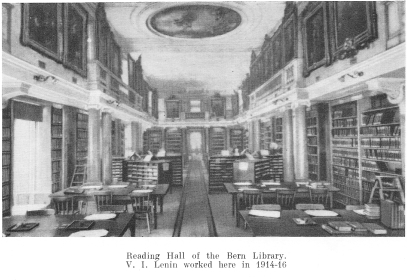 Written 1915 · pages 337–353 · First published 1930 in Lenin Miscellany XII Published according to the manuscript · Translated by Clemence Dutt
Conspectus of Lassalle’s book “Die Philosophie
Herakleitos des Dunklen von Ephesos.” Berlin, 1858 (The Philosophy
of Heraclitus the Obscure of Ephesus, Berlin, 1858) is contained in a notebook
following the note on Lipps’ book Natural Science and World Outlook.
Following the conspectus of Lassalle’s book, there is a fragment in the note
book entitled “On the Question of Dialectics.”
Note that this document has undergone special formating to ensure that
Lenin’s sidenotes fit on the page, marking as best as possible
where they were located in the original manuscript.
F. LASSALLE.
THE PHILOSOPHY OF HERACLITUS
THE OBSCURE OF EPHESUS,
TWO VOLUMES,
BERLIN, 1858 (pp. 379 + 479)
|
(Bern: Log. 119. 1)
In the epigraph, inter alia, |
|
One can understand why Marx called
The difference with respect to Marx:
Lassafle divided his work into two parts:
Marx in 1844-47 went from Hegel to
Some chapters of the second part are
The philosophy of the ancients and of
and the answer:
On p. 221 ff.[7] Lassalle quotes Plu- |
||||||||
|
“in the same way as everything is created |
Heraclitus on gold and commodities |
|||||||
|
for gold and gold for things....”
In this connection, Lassalle writes about |
||||||||
|
abstract unity”) and adding: ...“that this |
incorrect (Lassalle’s idealism) |
|||||||
|
(But all the same NB that this was
In note 3 on p. 224 (pp. 224-225) Las-
On pp. 225-228. Lassalle reproduces
The passage is a good one: it conveys
This is naïvely and delightfully expressed
(NB:) This Cratylus reduced Heraclitus’
The basic law of the world, according
Lassalle expounded the meaning of |
||||||||
|
And the words of Heraclitus: “The world |
||||||||
Hence Philo said of Heraclitus’ doctrine, |
||||||||
|
...“that it” (die Lehre[13]), “like that |
NB | |||||||
|
ple of “touching up” as Hegelian:
Lassalle translates the famous passage |
||||||||
|
“However many discourses I have
According to Lassalle the meaning
Heraclitus said: “time is a body” (p.
Fire for Heraclitus, it is said = the
If Heraclitus was the first to use the
— A quotation from the Zend-Avesta.[16]
In § 17 on the relation between Δίχη[17]
Plato (in the Theaetetus) is al-
“Necessity binds together the essential-
“Heraclitus is ... the source of the con-
Cicero:
Volume II.
Speaking of “fire,” Lassalle proves, ((Squeezing into Hegelian!))
Heraclitus accepted “pure and absolute- On p. 56 (Vol. II) Lassalle introduces |
||||||||
|
a quotation |from Clemens Al.,[22] Stro- |
||||||||
|
“The world, an entity out of everything, |
NB |
|||||||
|
A very good exposition of the principles
“The world — — was, is and will be con-
An excellent example how Lassalle
The second section of the second part
From Section III (“The Doctrine of Cog- |
||||||||
|
“For the One is that which consists of |
NB | |||||||
|
the opposites are revealed. Is not this the |
NB |
|||||||
|
And the following quotation also from |
||||||||
|
...“In the same way, too, the parts of |
||||||||
|
tains and plains, water—into fresh and |
||||||||
|
wise spring and autumn. And this served |
NB | |||||||
|
the aphorism about opposites, he added |
||||||||
|
to it innumerable and laboriously worked- |
||||||||
|
According to Heraclitus the criterion
On p. 337, quoting, inter alia, Büch-
A quotation from Chalcidius (in Ti-
From Clemens (Stromata V.):
Heraclitus, Lassalle says, is “the father
In the § on “Cratylus,” Lassalle proves |
|
Ergo: T h e h i s t o r y o f
p h i l o s o p h y
” ” the mental development of the child ” ” the mental development of animals ” ” l a n g u a g e NB:
+ psychology
+ physiology of the sense o r g a n s |
these are the fields of knowlege from which the theory of knowl- edge and dialectics should be built
|
|
...“We have shown—says Lassalle—that |
||||
|
...“Names are for him” (Heraclitus) “laws |
NB | |||
|
And it is precisely Heraclilean ideas |
very important! NB |
|||
|
“For both laws and names are for the
Plato analyses and refutes the philos-
(IV. Ethik, pp. 427-462.)
On pp. 458-459 Lassalle writes that Ne- |
||||
|
...“This fatum is intended to signify only |
Naturnot- wendigkeit[31] in Lassalle |
|||
|
(The Stoics, according to Lassalle, took
In general, ΣΣ,[32] Marx’s judgment is |
Notes
[1] Hegel, Werke, Bd. XIII, Berlin, 1833.—Ed.
[2] Reference is being made to the conspectus of Hegel’s work Lectures on the History Of Philosophy, in which Lenin makes this quotation. (See p. 259 of this volume.)—Ed.
[3] Lenin is referring to a letter from Marx to Engels dated February 1, 1858 (see Marx and Engels, Selected Correspondence, Moscow, 1955, pp. 121-123).
[4] industrious—Ed.
[5] V. I. Lenin wrote the word “garlic” above the word “Knoblauch.”—Ed.
[6] evaporation—Ed.
[7] et. seq.—Ed.
[8] function of money—Ed.
[9] token of value—Ed.
[10] modern discoveries in this field—Ed.
[11] logos—Ed.
[12] necessity—Ed.
[13] the doctrine—Ed.
[14] “the One Wise”—Ed.
[15] Ahriman—the Greek name for the ancient Persian God personifying the source of evil, an eternal and irreconcilable enemy of his brother Ormazd, the Good Spirit.
[16] Zend-Avesta—the designation for the ancient Persian religious books expounding the Zoroastrian religion founded, according to legend, by the prophet Zarathustra (Zoroaster).
[17] justice—Ed.
[18] necessity of all things—Ed.
[19] of becoming—Ed.
[20] logically pre-existent—Ed.
[21] idealistic philosophy—Ed.
[22] Clement of Alexandria—Ed.
[23] free translation—Ed.
[24] corrects (ironic)—Ed.
[25] subjective empiricist—Ed.
[26] objective idealist—Ed.
[27] Lenin is referring to Theses on Feuerbach by Marx written in 1845 (see Marx and Engels, Selected Works, Vol. II, Moscow, 1958, pp. 403-405).
[28] is transformed—Ed.
[29] Cratylus—Plato’s dialogue, directed against the Sophists.
[30] briefly—Ed.
[31] natural necessity—Ed.
[32] summa summarum—Ed.